

Knowing how to fertilize indoor plants starts with checking whether they need feeding at all. Extra fertilizer cannot fix a dark corner, damaged roots or a watering routine that leaves the pot constantly wet.
Before feeding, check four things: the plant is actively growing, it receives adequate light, its roots seem reasonably healthy, and the potting mix is appropriately moist. A new leaf unfurling or a stem extending is more useful than a date printed on a calendar.
If growth has paused for six weeks or more, the plant may be resting. Check its conditions too, because poor light, drought, root rot and pests can also stop growth. Fertilizer should not be used as a cure for those problems.
Start cautiously, use the product directions and watch the response. A modest, carefully measured routine suited to the plant is easier to manage than repeated strong feeds followed by damage control.
Fertilizer Is Not Food: How NPK Feeds Indoor Plants
Plants make their own food through photosynthesis. Fertilizer supplies nutrients, so think of it as a multivitamin rather than a meal.
Nitrogen supports chlorophyll and amino acids, helping leaves and stems develop. A shortage can contribute to yellowing older leaves and slow growth. Phosphorus supports energy transfer, roots and flowering. Potassium helps regulate water balance, leaf pores and enzymes, supporting overall vigour.
Plants also need nutrients such as calcium, magnesium, iron, zinc and boron. These work together; a single leaf symptom does not identify one missing mineral with certainty.
NPK numbers describe the product’s nutrient analysis by weight. A 10-10-10 fertilizer has ten percent nitrogen and matching declared percentages for phosphate and potash. Higher numbers mean a more concentrated analysis, not a better product.
Understanding how to fertilize indoor plants also means understanding salts. Dissolved fertilizer raises the concentration of salts around roots. Too much makes water harder to absorb; in severe cases, water moves out of roots into the surrounding soil.
That explains why a plant can wilt even when its mix feels moist. Adding another dose can worsen this stress. The aim is to supply enough nutrients for growth without turning the root zone into a concentrated solution.
Feed a Growing Plant, Not a Calendar Date
Work out how to fertilize indoor plants by watching growth alongside changing daylight. In many Northern Hemisphere homes, March to October covers the broader feeding period, with stronger growth often between April and September. Readers in Australia and New Zealand should follow their local seasons instead.
| Season | Growth and light | Feeding decision |
|---|---|---|
| Spring | New leaves and longer days | Start gently, typically every 2–4 weeks. |
| Summer | Strong active growth | Continue half-strength feeding every 2–4 weeks. |
| Early autumn | Growth slows | Taper toward monthly. |
| Late autumn | Little new growth | Stop for resting plants. |
| Winter | Short days and paused growth | Skip, unless growth continues. |
Clemson Extension links feeding benefit to sufficient light, describing at least 200 foot-candles for twelve hours daily for foliage plants. Treat this as context, not a universal switch.
Grow lights or warm, bright rooms can support continued growth. A twelve-hour timer does not guarantee it. Do not assume that every pause is true dormancy. Look for new leaves, extending stems or visible root tips before continuing a weak monthly feed.
How Often to Feed Indoor Plants by Type and Light
Deciding how often to fertilize indoor plants means matching the routine to growth, light and product strength. The examples below apply to plants growing healthily, not struggling plants that need another problem corrected first.
| Plant group | Starting frequency during active growth | Strength or caution |
|---|---|---|
| Fast tropical foliage | Every 2–4 weeks | Half strength. |
| Moderate growers | Every 4–6 weeks | Half strength. |
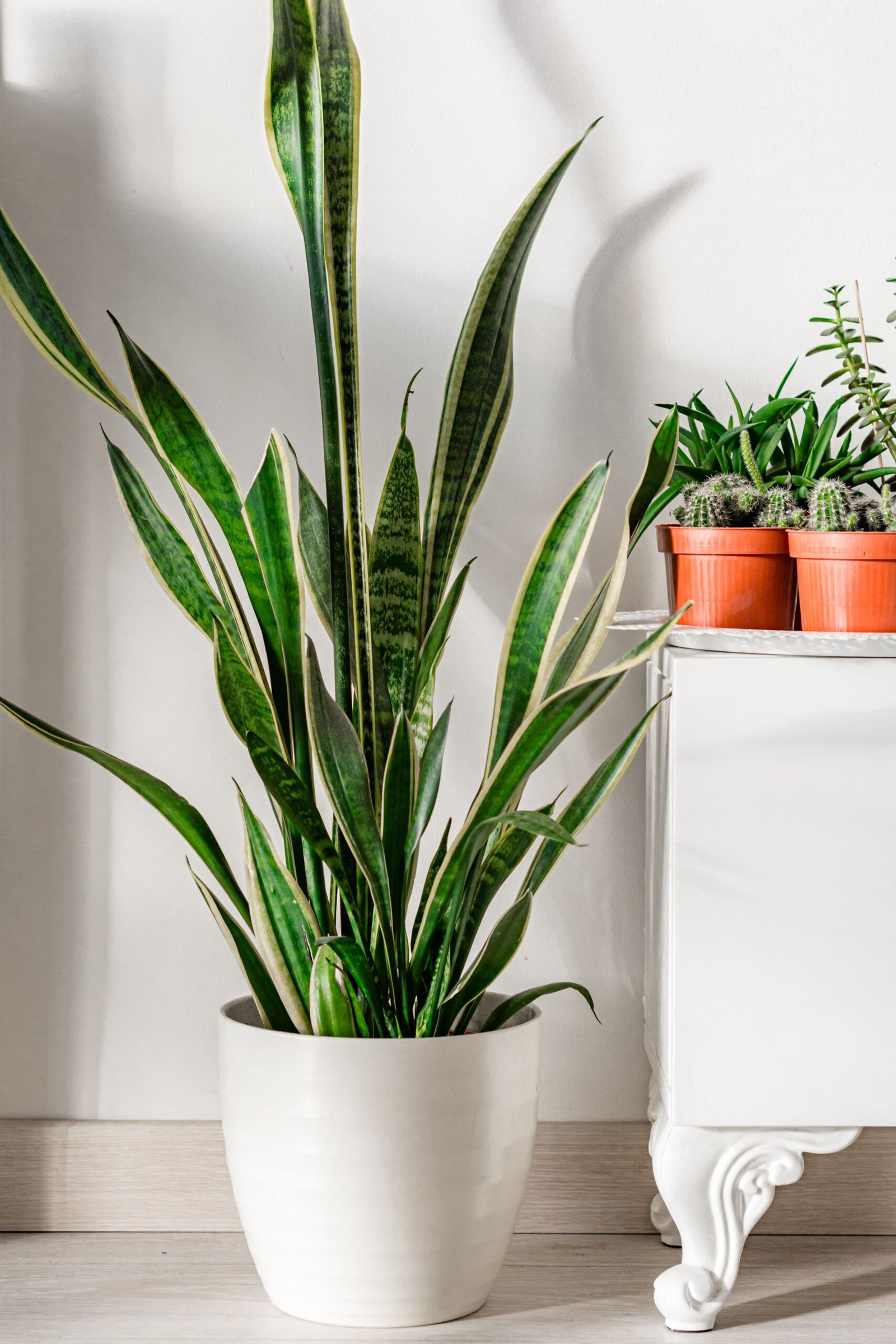
| Snake plants and ZZ plants | Every 6–8 weeks, or a few seasonal feeds | Keep feeding light. |
| Succulents and cacti | Two or three feeds per growing season | Quarter strength; skip winter rest. |
| Orchids | Weak feeding with regular waterings while growing | Quarter-dose specialist product. |
| African violets | Every 2 weeks while blooming | Quarter strength, violet-specific formula. |
| Ferns and calatheas | Every 4–6 weeks | Quarter strength. |
| Indoor herbs | Around every 2–3 weeks | Adjust to growth and label. |
| Indoor citrus | Every 4 weeks while actively growing | Add calcium and magnesium as well. |
Lower light and slower growth usually call for less feeding. For a slow snake plant, skipping a scheduled feed can be more sensible than forcing summer growth. Minnesota Extension’s growth-led approach is more useful than repeating a dose because another fortnight has passed.
Clemson Extension describes label-rate feeding every two to three months as one option. That is an alternative schedule, not an exact equivalent of every diluted routine. Products differ, so concentration and frequency must be considered together.
Once you understand how to fertilize indoor plants this way, tapering becomes easier. Space feeds farther apart as growth slows, then pause for rest. Do not keep adding nutrients simply because the bottle still has plenty left.
Choosing the Right Fertilizer: Ratios, Liquids, Granules and Organics
The best fertilizer for indoor plants is usually a suitable product you can measure accurately. Balanced liquid formulas such as 10-10-10 or 20-20-20 offer a practical general starting point.
A 3-1-2 ratio, associated with University of Florida Apopka foliage-plant guidance, supplies proportionally more nitrogen than phosphorus. It is a ratio, not necessarily the concentration printed on every bottle.
| Formula or type | Typical use | Main consideration |
|---|---|---|
| Balanced liquid | General houseplants | Easy to dilute and adjust. |
| 3-1-2 ratio | Foliage growth | Match dose to the actual product. |
| 15-30-15 | Flowering plants | Use when suitable, not as a universal requirement. |
| Slow-release granules | Convenient longer feeding | Release depends on the product and conditions. |
| Fertilizer spikes | Local nutrient delivery | Distribution can be uneven. |
| Fish emulsion, seaweed or worm castings | Organic feeding options | Composition and concentration vary. |
Check whether a potting mix already contains feed before deciding which format to buy next. Liquid feeds give you control over the next application. Granules release over months, and warmer conditions can speed release, making them less flexible after application.
Penn State Extension warns against combining slow-release and liquid fertilizers in one container. Their combined salt load can damage roots.
Both organic and synthetic fertilizers ultimately supply mineral ions. Organic products may release nutrients more gradually, but they can still be overused.
When choosing how to fertilize indoor plants, compare the analysis, directions and application method rather than chasing a winning brand. Familiar products include Miracle-Gro 24-8-16, Espoma Organic 2-2-2, Neptune’s Harvest Fish & Seaweed 2-3-1, Schultz 10-15-10 and Osmocote slow-release granules; none removes the need to check growth.
For advice tailored to individual plants, browse our Indoor Plant Guides collection.
How to Apply Fertilizer Safely, Step by Step
Use these six steps to decide how to fertilize indoor plants without guesswork.
Check for active growth and adequate light. If the plant is declining, assess water, roots and pests before feeding.
Moisten dry mix with plain water first. Allow about thirty minutes before feeding rather than applying fertilizer to bone-dry roots.
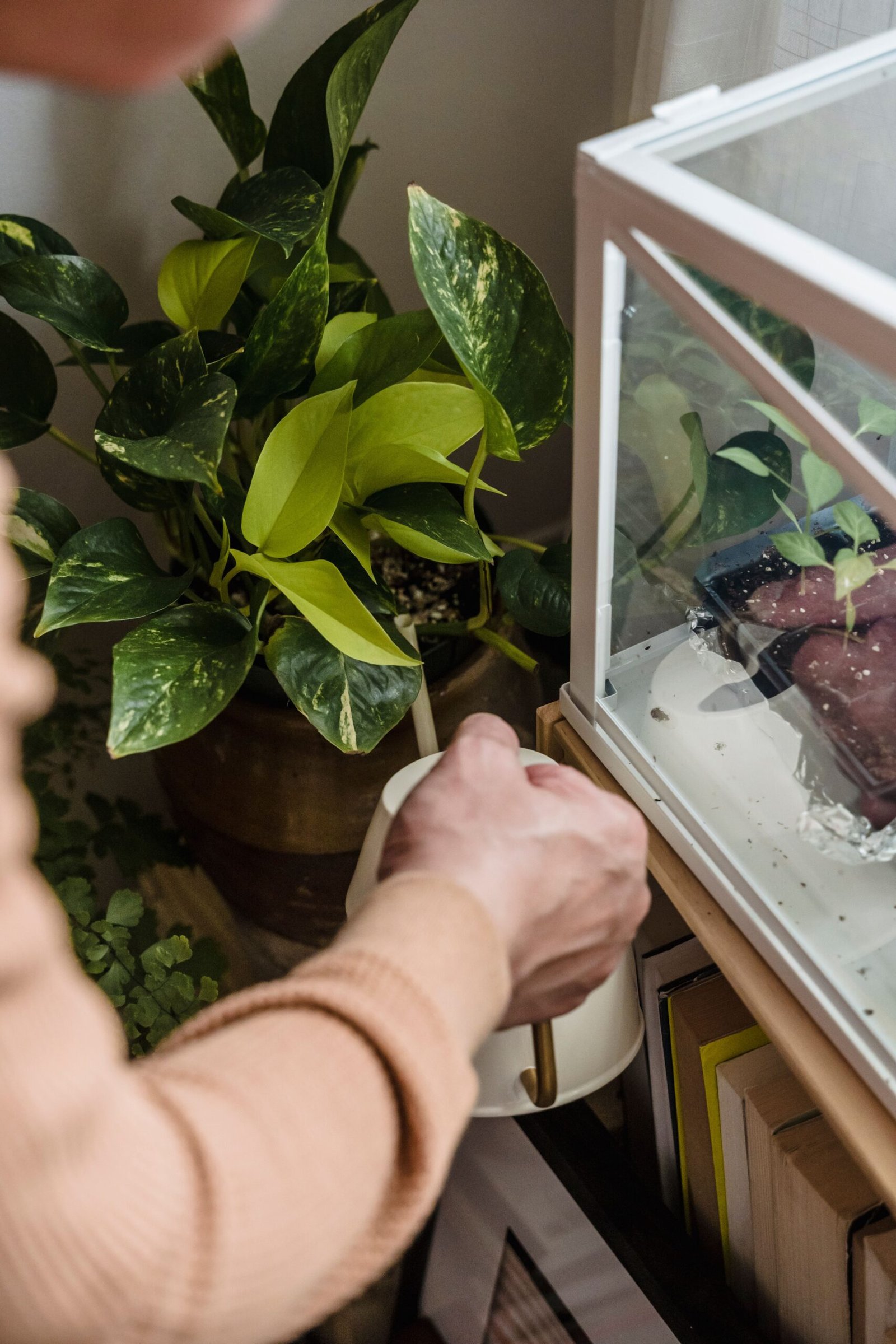
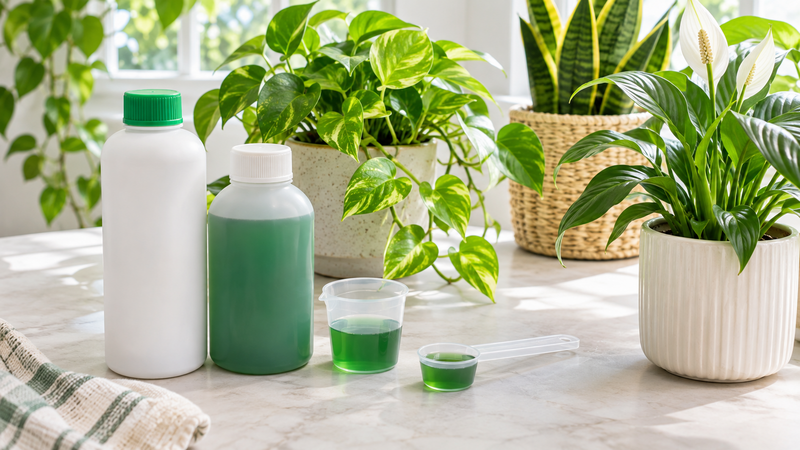
Mix the feed into water outside the pot. For a half-strength application, use half the amount stated for the same water volume.
Pour evenly over the soil surface, allowing a little drainage. Empty the saucer, and avoid splashing leaves or pouring into tight crowns.
Skip routine feeding after repotting into nutrient-containing mix. Wait roughly four to eight weeks, considering any fertilizer already included.
Periodically flush freely draining soil with plain water, around every two to three months, to reduce accumulated salts.
For example, if the label calls for one teaspoon per gallon, half strength means half a teaspoon in that gallon. The example explains dilution; it is not a universal dose for every formula. Keep measuring tools labelled.
Understanding how to fertilize indoor plants includes knowing when to stop pouring. Do not leave nutrient-rich runoff beneath the pot, where it can keep roots wet.
Use foliar feeding only when the product is intended for it. Follow those directions rather than assuming every root fertilizer belongs on leaves. Keep foliar applications out of direct sun and avoid unnecessary residue.
Feeding by Plant Type: Tropicals, Succulents, Ferns, Orchids and Flowering Plants
Plant groups need different levels of attention, even when they share a room. Use the earlier table as a starting point, then adapt to the plant in front of you.
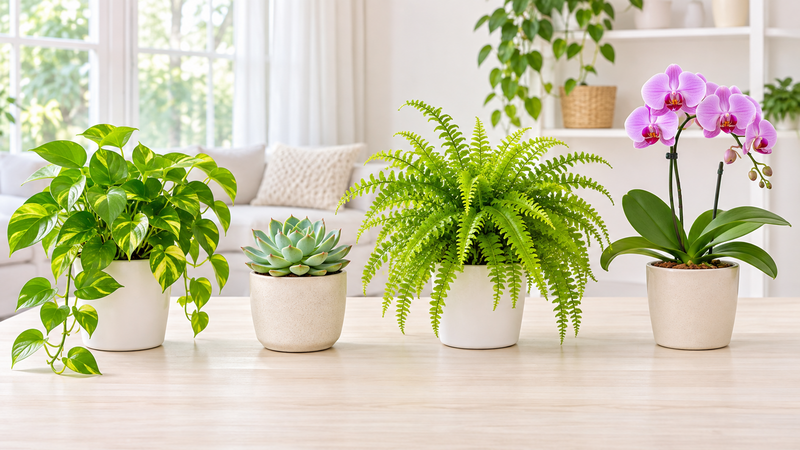
Fast-growing tropical foliage, including pothos, monstera and philodendron, can use regular diluted feeding during spring and summer. Half-strength applications every two to four weeks are a reasonable starting routine when light and growth are strong.
Succulents and cacti need much less. A few quarter-strength feeds during their growing season may be enough. A small top dressing of worm castings once a season is another gentle option. Skip feeding during winter rest rather than trying to keep them growing through fertilizer.
Ferns and calatheas deserve a lighter approach because their fine roots are sensitive to salts. Quarter-strength feeding every four to six weeks during healthy growth offers a cautious starting point. Watch the condition of new foliage.
Orchids growing in bark need a routine suited to that medium. A quarter-dose specialist feed with regular waterings during active growth is often described as “weakly, weekly.” Let growth and the label guide you rather than feeding an inactive orchid automatically. Flush the bark with plain water periodically.
African violets benefit from light feeding with an appropriate violet product while growing and blooming. Directions vary between occasional feeds and much weaker applications with watering; choose one approach.
Flowering plants may suit a higher-phosphorus formula when buds develop — for example, a 7-9-5 bloom formula — but extra phosphorus cannot replace sufficient light.
Knowing how to fertilize indoor plants means respecting these differences. Avoid giving every pot the same strong solution merely because watering them together is convenient. Group plants with similar needs when planning the routine.
Seven Signs of Overfertilizing and How to Fix Them
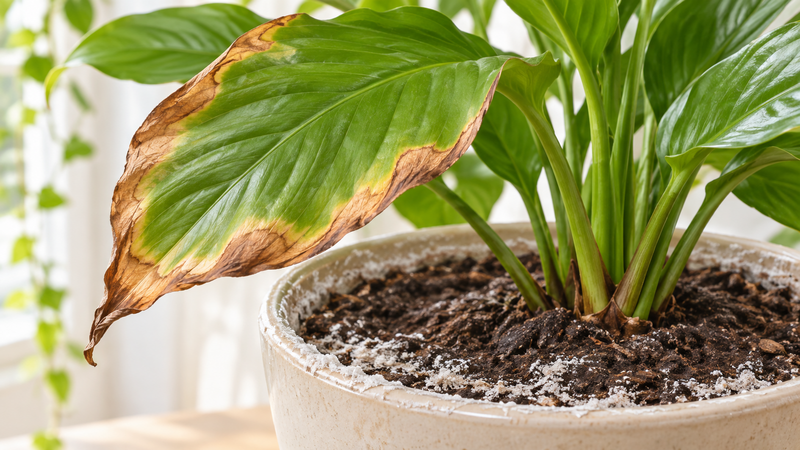
The signs of overfertilizing houseplants can overlap with poor watering or root disease. A recent feed followed by several symptoms makes excess salts worth investigating.
| Sign | Check and first response |
|---|---|
| White crust on soil or rim | Review feeding and water hardness; deposits alone are not proof. |
| Crispy tips and edges | Check moisture and recent doses; pause feeding. |
| Yellowing lower leaves or patchy colour | Review roots and conditions before adding nutrients. |
| Wilting despite moist mix | Check drainage and root health; do not feed again. |
| Distorted or halted new growth | Assess recent applications and combined products. |
| Sudden leaf, bud or flower drop | Look for a recent change in feeding or conditions. |
| Dark, mushy roots or unusual smell | Inspect roots; damaged roots need attention. |
Symptoms after a strong feed may develop quickly, while slow-release problems can emerge later. Deficiencies often progress more gradually, but timing is a clue, not a diagnosis.
Stop feeding immediately. If drainage works and the root ball is not already waterlogged, flush thoroughly with plain water and let excess escape. Remove collected runoff.
Pause all feeding for four to eight weeks, longer if roots remain unhealthy. Repot only when damaged roots or unsuitable mix require it, then allow time before restarting.
Understanding how to fertilize indoor plants safely means judging recovery by healthy growth, not expecting scorched tissue to repair.
For more maintenance advice, visit our Plant Care collection.
Feeding Safely Around Pets
Properly diluted fish emulsion and seaweed can be gentler plant feeds, but organic does not mean pet-safe.
Keep granules and bone/blood meal sealed away; dogs may eat them and develop serious illness. Wipe or rinse residue from leaves and prevent access to treated soil according to the label.
Call a vet if fertilizer is eaten; report vomiting, drooling or lethargy.
True lilies are toxic to cats in all parts, including pollen and vase water.
If you have a cat, review which household plants are safe for cats before choosing where to keep them.
Check every plant, not just its fertilizer.
When to Stop Fertilizing Houseplants for Winter
Deciding when to stop fertilizing houseplants in winter starts with growth, not a date. In Northern Hemisphere homes, feeding often pauses around late October or early November and resumes as new growth returns in late winter or spring.
| Plant condition | Winter decision |
|---|---|
| Resting with little new growth | Stop feeding. |
| Still actively growing in good light | Consider one weak monthly feed, following the label. |
| Growing under effective lights | A quarter-strength monthly routine may suit it. |
| Winter-flowering plant | Follow its specific growing and feeding needs. |
Winter bloomers need individual attention.
Clemson and several university extensions advise no feeding during winter rest. RHS includes year-round specialist feeding for orchids. These recommendations concern different plant conditions, not permission to feed every resting pot.
Seasonal decisions about how to fertilize indoor plants should follow available light and actual growth. Warm air alone does not prove nutrients are needed.
Taper as growth slows. On restarting, flush suitable draining pots if salts have accumulated, then begin gently. New leaves matter more than reaching a particular month. Southern Hemisphere readers should shift the seasonal calendar to local conditions.
Common Fertilizing Mistakes to Avoid
Feeding dry roots exposes an already stressed root zone to concentrated salts. Moisten the mix first.
Feeding recently repotted plants can duplicate nutrients already in fresh compost. Feeding resting plants adds nutrients they may not use.
Stacking granules, spikes and liquid feeds makes the combined dose harder to control. Choose a clear routine rather than adding products together.
Increasing strength to compensate for poor light misses the problem. Nutrients cannot replace the energy plants gain from light.
Treating every yellow leaf as a deficiency invites unnecessary feeding. Check moisture, roots, light and normal leaf ageing first.
Assuming organic products are harmless around pets ignores ingestion risks. Store all feeds securely, especially tempting scented meal-based products that dogs may find attractive.
Frequently Asked Questions
How often should I fertilize indoor plants?
During healthy active growth, half-strength liquid feeding every two to four weeks is a useful starting point. Slow growers and plants in lower light need less. Skip resting plants, and check the product directions rather than applying the same routine to every pot. Light and growth change feeding needs.
What is the best fertilizer for indoor plants?
A balanced liquid houseplant feed is a practical general choice because you can measure and dilute it easily. Formulas such as 10-10-10 or 20-20-20 are options. Foliage plants can also suit a 3-1-2 ratio. Match the dose and product to the plant. Higher numbers do not mean better.
What are the signs of overfertilizing houseplants?
Watch for crusty deposits, crispy leaf edges, yellowing, wet-soil wilting, distorted growth, sudden leaf drop and damaged roots. Several changes soon after feeding deserve attention, but these signs have other causes too. Review the dose, drainage and root condition before deciding what happened. Hard water can also leave deposits.
When should I stop fertilizing houseplants in winter?
Stop when growth pauses. Continued warmth does not cancel low winter light. Plants still growing or flowering may need a weak, occasional feed suited to their requirements. Resume gently when healthy new growth returns, using local seasons rather than another country’s calendar. New leaves provide useful guidance.
Can fertilizer burn indoor plant roots?
Yes. Excess dissolved salts interfere with water uptake and, at high concentrations, can draw water out of roots. The plant may wilt despite moist soil. Avoid strong applications, never feed bone-dry roots, and flush accumulated salts only where water can drain freely. More fertilizer cannot repair damage.
Sources: RHS — How to Feed Plants