


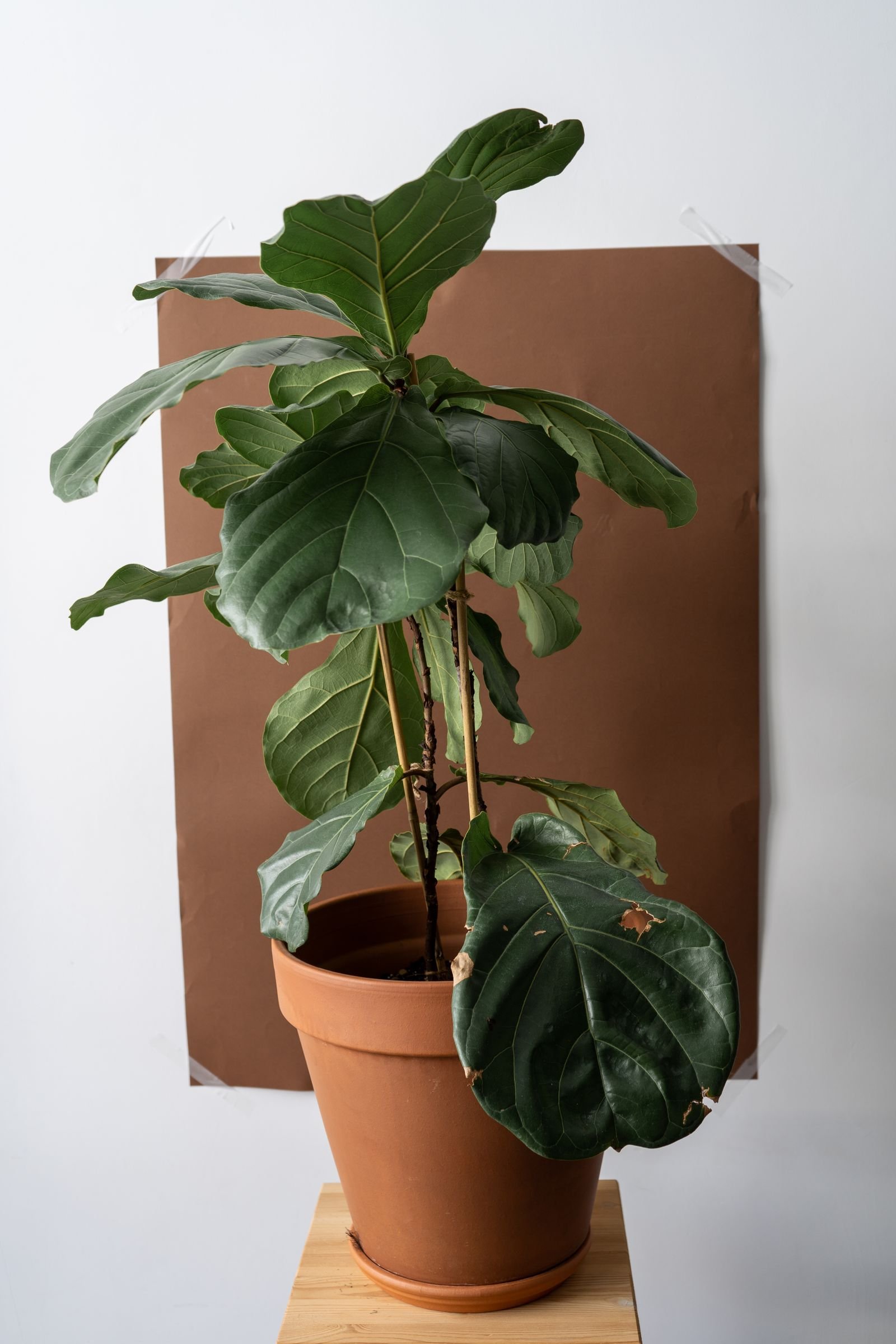
Brown, crispy tips on indoor plants are one of the most common houseplant complaints — and one of the most misunderstood. The brown tip itself is dead leaf tissue, and it will not turn green again. But it is also a useful clue: leaf tips are the farthest point from the roots, so they are the first place to show up when water is not reaching the leaf properly, whether the problem is dry air, dry soil, damaged roots, or salts building up in the pot.
Here is the short answer, then the full diagnosis.
The Short Answer
In most cases, brown tips mean the air is too dry or the watering is inconsistent. In winter, heated indoor air is often below 30% humidity while most tropical houseplants prefer around 40–60%, so the tips dry out first. Check the soil too: push your finger about 2 inches into the pot. Bone-dry soil points to underwatering; soggy soil with soft brown tips points to overwatering and root stress. If the tips are crispy and the plant was recently fertilized, or you always water with hard tap water, salt buildup is the likely cause — flush the soil thoroughly. Trim the brown tips off for looks, then fix the one cause that matches your diagnosis.
Quick Diagnosis: Match What You See
| What you see | Most likely cause | First fix |
|---|---|---|
| Crispy, papery tips; worse in winter with the heat on | Low humidity / dry air | Raise humidity around the plant (see below) |
| Crispy tips, bone-dry soil, soil pulling away from the pot | Underwatering | Water thoroughly; water only when the top 1–2 inches are dry |
| Brown tips that feel soft, soil stays wet, plant droops | Overwatering / root stress | Stop watering; let soil dry; check drainage and roots |
| Brown tips after fertilizing; white crust on soil or pot | Fertilizer burn / salt buildup | Flush the soil with plain water; feed less, and only in the growing season |
| Slow browning from the very tip inward on spider plant, dracaena, or calathea; watering otherwise fine | Tap-water sensitivity (fluoride) | Switch to filtered, distilled, or rainwater |
| Brown, bleached patches on the side facing the window | Too much direct sun | Move back from the window or filter the light |
| Brown tips after a cold snap, a move, or near a vent | Cold drafts / hot air from vents | Move away from drafts, doors, and heating vents |
1. Low Humidity — the Most Common Cause
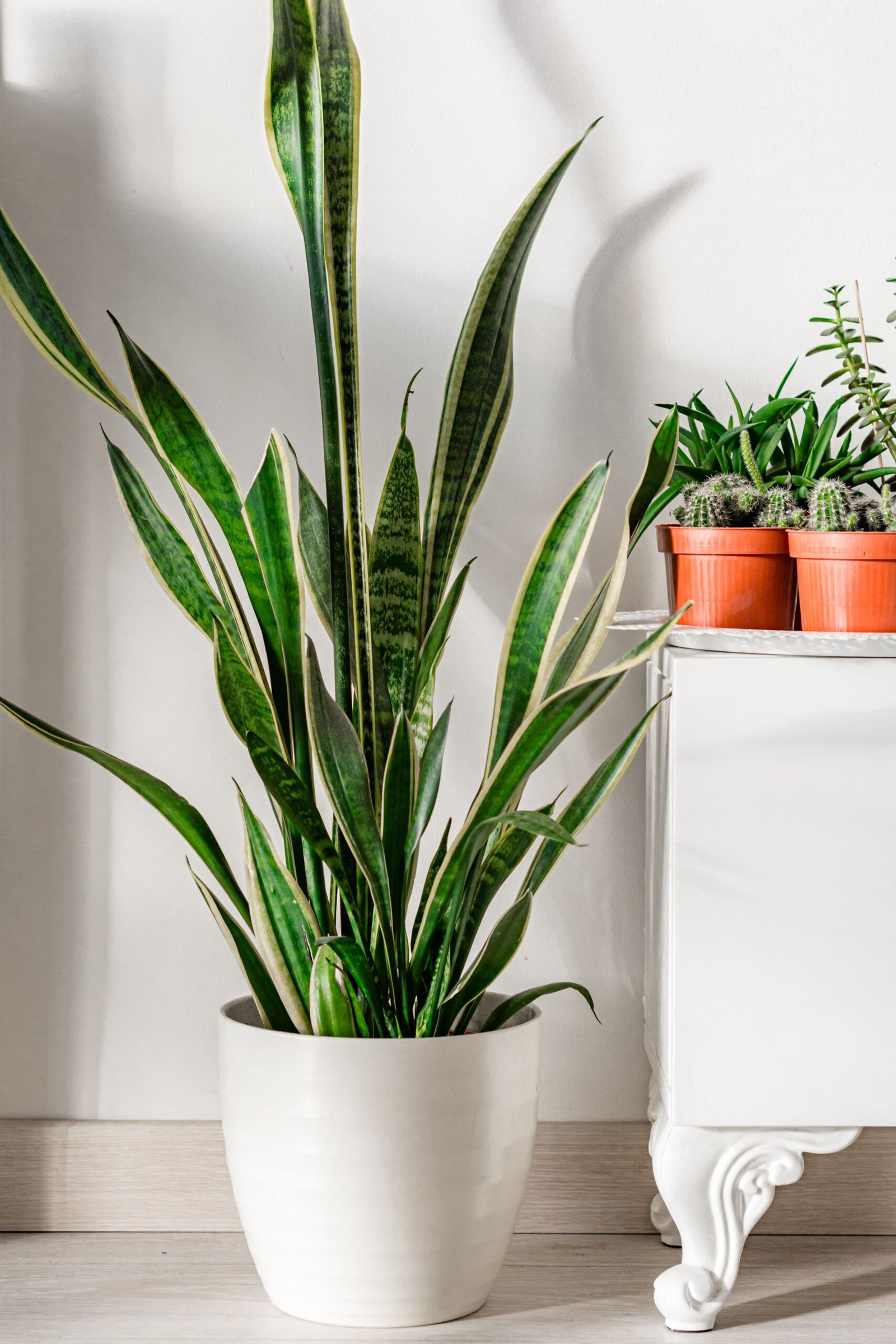
Most popular houseplants come from humid tropical forests, but a heated home in winter is often very dry. When the air is dry, leaves lose water faster than the roots can replace it, and the tips — served last by the plant’s water supply — dry out first. Thin-leaved plants such as calatheas, ferns, peace lilies, and spider plants show it first; thick-leaved plants such as snake plants are usually less affected.
Fix: Aim for around 40–60% humidity for most tropical houseplants. A small humidifier near your plants is the most reliable fix. Grouping plants together also helps a little, as does a pebble tray with water under the pot (keep the pot itself above the water, not sitting in it). Misting gives only a few minutes of higher humidity and is not a reliable fix on its own — do not rely on it. A cheap hygrometer tells you the real number instead of guessing.
2. Underwatering — and Inconsistent Watering
A plant that dries out completely between waterings, or that gets watered heavily one week and forgotten the next, will often brown at the tips. Dry soil kills the fine root hairs that absorb water, so even after you water again, the plant cannot take it up properly for a while.
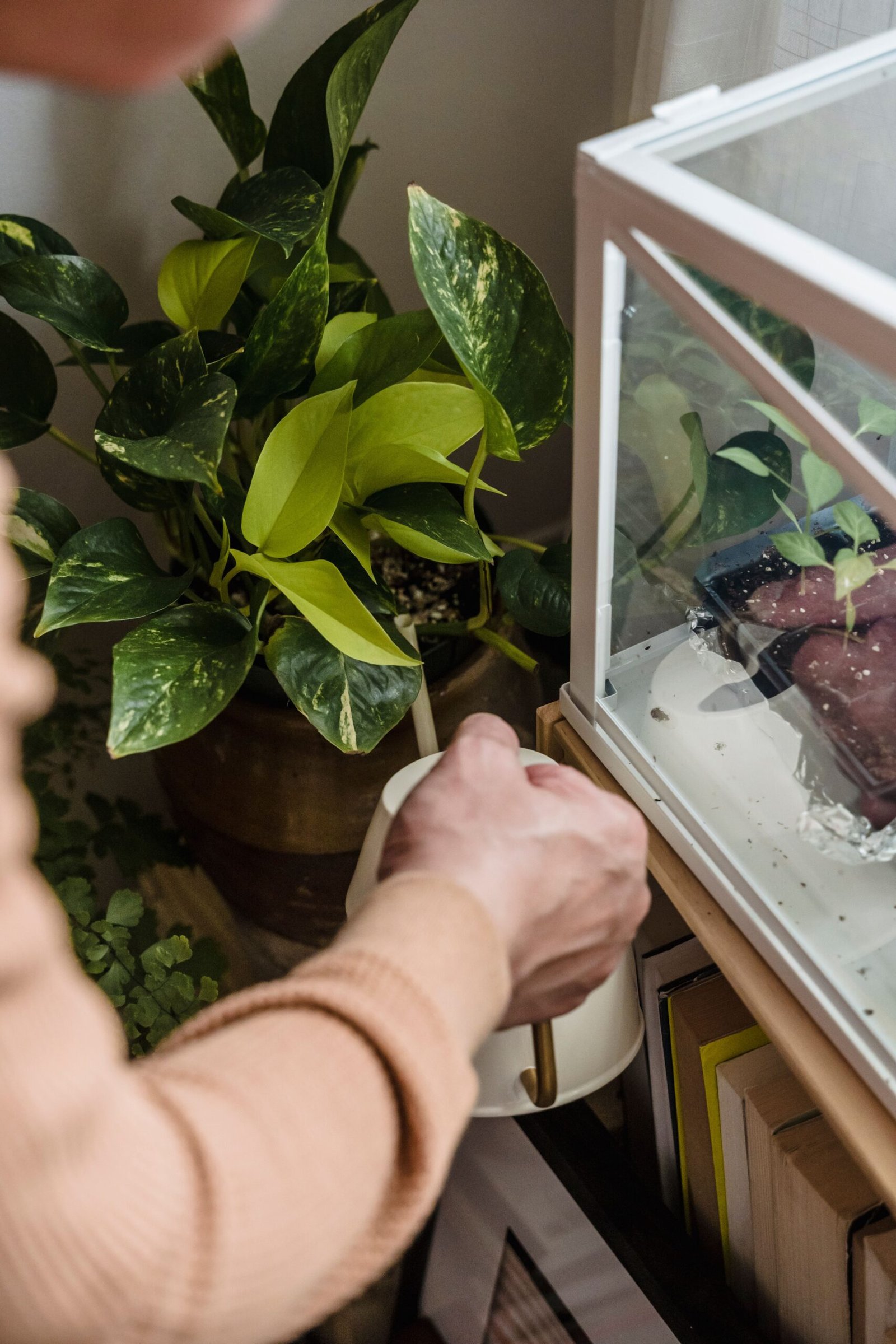
Fix: Water thoroughly until water runs from the drainage holes, then empty the saucer. Going forward, use the finger test rather than a calendar: water when the top 1 to 2 inches of soil feel dry, which for most indoor plants is about every 1 to 2 weeks in the growing season and every 2 to 4 weeks in winter. If the soil has shrunk away from the sides of the pot, soak the whole pot in a basin of water for 15–20 minutes so the mix rehydrates, then let it drain fully.
3. Overwatering — When the Tips Go Soft, Not Crispy
Overwatering causes brown tips too, but they usually look different: soft or mushy rather than dry and papery, sometimes with yellowing around the brown area. Soggy soil starves roots of oxygen, and damaged roots cannot deliver water to the leaf tips — so the plant looks thirsty even though the soil is wet.
Fix: Do not water again until the top 2 inches of soil feel dry. Empty the saucer after every watering so the plant never sits in standing water. If the pot has no drainage hole, water much more carefully — or move the plant to a pot with drainage. If the soil smells sour or the stems feel soft at the base, check the roots: firm, light-colored roots are healthy; brown, black, or mushy roots are rotted and should be trimmed, with the plant repotted in fresh, well-draining mix.
4. Fertilizer Burn and Salt Buildup
Every time you water with tap water or add fertilizer, mineral salts accumulate in the potting mix. Over time, high salt levels draw moisture away from the roots, and the leaf tips — where salts concentrate — turn brown. A white, crusty deposit on the soil surface or the outside of a clay pot is the telltale sign, as is browning that appeared soon after you fertilized.
Fix: Flush the soil: slowly pour plain water through the pot — roughly three times the pot’s volume — until water runs freely from the drainage holes for several minutes, carrying dissolved salts out. Repeat every 2–3 months if you use tap water. Feed less, and only during the growing season (spring and summer): most indoor plants need little or no fertilizer in winter, and more fertilizer never fixes a plant that is already stressed.
5. Tap Water Sensitivity — Fluoride and Chlorine
Some plants are unusually sensitive to what is in tap water. Spider plants, dracaenas, calatheas, and peace lilies are the classic cases: fluoride travels up through the plant and accumulates specifically at the leaf tips, where it reaches toxic levels and kills the tissue. The result is brown tips that creep slowly inward, even when humidity and watering are fine.
Fix: Switch sensitive plants to filtered, distilled, or rainwater — this is the most effective solution. One common piece of advice needs correcting: leaving tap water out overnight lets chlorine evaporate, but it does not remove fluoride, and many water suppliers now use chloramine, which does not evaporate either. Avoid softened water too: water softened with sodium can cause tip burn over time.
6. Too Much Direct Sun
Hot, direct sun through a window can scorch leaves, leaving brown or bleached patches — usually on the side facing the glass. This is most likely in a south- or west-facing window in summer, or when a plant is moved suddenly from a shady spot into full sun.
Fix: Pull the plant back a few feet from the window or filter the light with a sheer curtain. East-facing morning light is usually gentle enough for most indoor plants. Move a plant gradually if you are changing its light — a sudden jump from shade to sun is itself a shock.
7. Cold Drafts and Hot Air from Vents
Leaf tips are the most exposed part of the leaf, so they are the first to suffer from cold air off a drafty window or exterior door, or hot, dry air blowing straight from a heating vent or radiator. Browning that appears after a cold snap, a move to a new spot, or the start of the heating season usually points here.
Fix: Keep plants away from drafty windows at night, exterior doors, and heating or air-conditioning vents. Most indoor plants are happiest between about 60°F and 85°F, with no sudden swings. If a plant must sit near a window in winter, pull it back a few inches from the cold glass at night.
What to Do Today: A 5-Minute Checklist
- Touch test: Are the brown tips crispy and dry, or soft and mushy? Crispy points to dry air, underwatering, or salts; soft points to overwatering.
- Finger test: Is the top 2 inches of soil wet, damp, or bone dry?
- Humidity check: Is the heat on, and is the plant near a vent or radiator? A hygrometer reading below 40% is a strong clue.
- Salt check: Any white crust on the soil or pot? Have you fertilized recently?
- Water check: Are you using tap water on a sensitive plant (spider plant, dracaena, calathea)? Try filtered or distilled water for a month.
- Trim and wait: Snip the brown tips off with clean scissors, following the natural shape of the leaf. Make the one fix that matches your diagnosis, and give the plant a few weeks before changing anything else — changing water, light, and fertilizer all at once makes it impossible to know what worked.
When to Worry — and When Not To
Worry, and act promptly, if browning spreads fast, whole leaves turn brown, stems feel mushy, or the soil smells sour — that points to root rot. Do not worry about a few brown tips on an otherwise healthy, growing plant: once the cause is fixed, new leaves should come in clean, and the old brown tips are cosmetic only. A plant that keeps browning on every new leaf, though, still has an unfixed cause — re-check humidity, water quality, and salts before trying anything new.
FAQ
Should I cut off brown leaf tips?
Yes. A brown tip will not turn green again. Trimming it off with clean scissors is safe and keeps the plant looking tidy. Cut just inside the brown area, following the leaf’s natural shape, so you do not cut into healthy green tissue.
Will the brown tips turn green again after I fix the problem?
No — dead tissue stays brown. The sign your fix worked is that new leaves come in without brown tips, and the browning on older leaves stops spreading.
Does misting fix brown tips?
Not reliably. Misting raises humidity for only a few minutes. A humidifier, grouping plants together, or a pebble tray is far more effective for a plant that needs steady humidity.
Why does my spider plant always get brown tips?
Spider plants are especially sensitive to fluoride in tap water, so they often brown at the tips even when humidity and watering are fine. Try filtered, distilled, or rainwater for a month and see whether new leaves stay clean.
Is tap water safe for all indoor plants?
Most plants tolerate it, but sensitive species — spider plants, dracaenas, calatheas, peace lilies — often do better on filtered, distilled, or rainwater. Letting tap water sit overnight removes chlorine only, not fluoride or chloramine.

