


If you watered your houseplants every week all summer, winter asks you to slow down. Shorter days, weaker sunlight, and cooler indoor temperatures mean your plants grow very little — and drink very little. The single biggest winter plant killer is not dry air. It is overwatering by owners following their summer routine.
Here is the short answer, then the full guide.
The Short Answer
Most indoor plants need water every 2 to 4 weeks in winter — roughly half as often as in summer. But “every X weeks” is only a starting point. The real rule is this: check the soil first, then decide. Stick your finger about 2 inches into the soil. If it feels dry, water. If it feels damp, wait a few more days.
Why Winter Changes the Watering Rules
Three things slow your plants down in winter:
- Less light. Days are shorter and the sun sits lower. Less light means slower photosynthesis, which means slower water use.
- Cooler air. Most homes run a few degrees cooler, and growth stalls. A plant that is barely growing barely drinks.
- Dormancy. Many popular houseplants — from pothos to ZZ plants — enter a rest period. They are not dead or sick; they are waiting for spring.
One thing that does not slow down: your furnace. Heated indoor air is dry, which dries out the top of the soil and stresses leaves — but the roots in the middle of the pot are still sitting in damp soil. That mismatch is exactly why the finger test beats any calendar.
The Winter Watering Rule (Memorize This)
Water only when the top 1 to 2 inches of soil are dry. For most leafy houseplants, that is the entire method. Two exceptions:
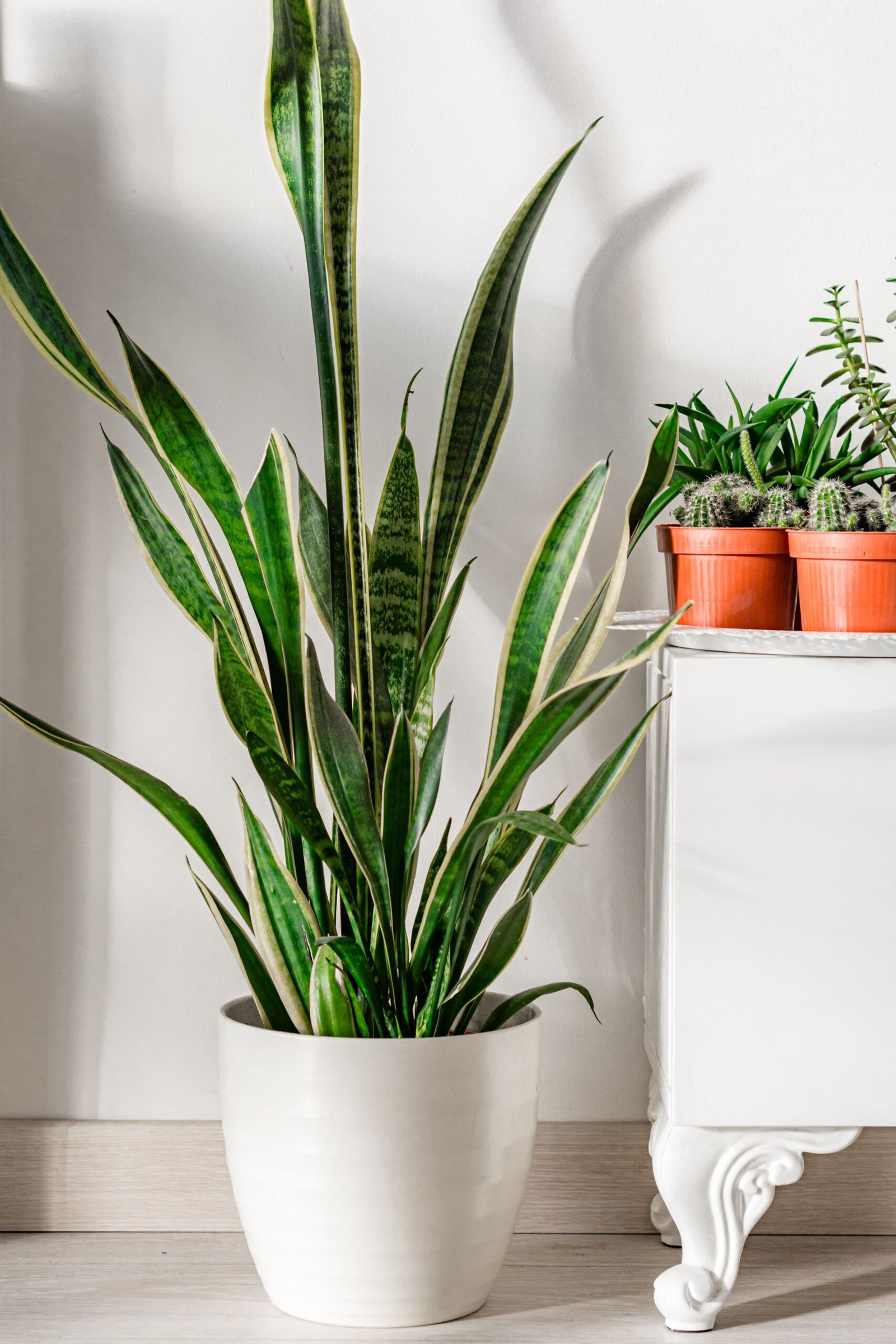
- Succulents, cacti, snake plants, ZZ plants: let the soil dry out completely between waterings. In winter that can mean once a month or even less.
- Thirsty tropicals (peace lily, ferns, calathea): keep the soil lightly moist, never soggy. These may still want water every 1 to 2 weeks.
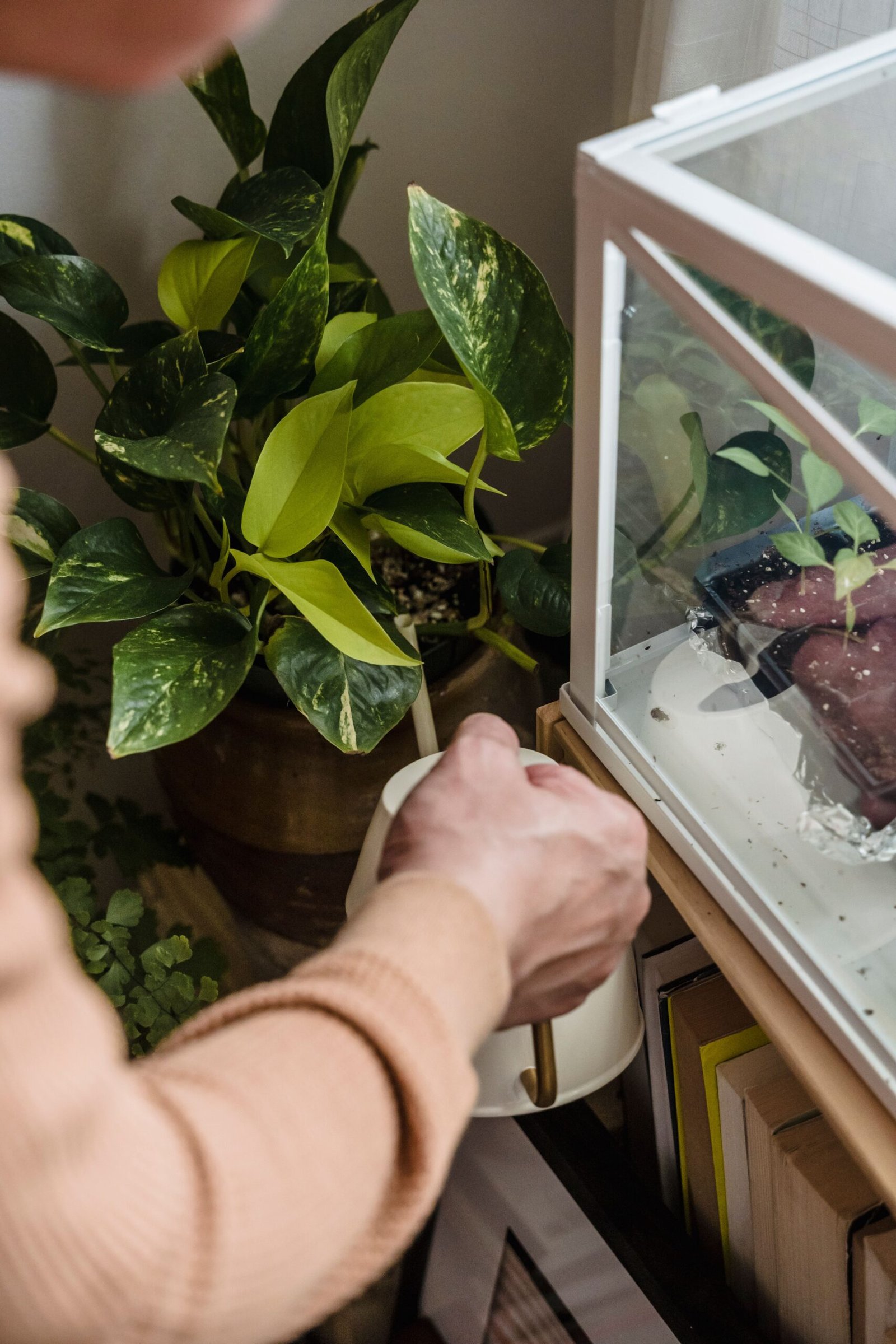
When you do water, water thoroughly: pour room-temperature water until it flows from the drainage holes, then empty the saucer after 15 minutes. A deep drink followed by a real dry-down is far healthier than frequent little sips.
What Changes Your Schedule
- Pot material. Unglazed terracotta breathes and dries fastest. Glazed ceramic and plastic hold moisture longer — add several days between waterings.
- Pot size and drainage. Small pots dry fast; big pots stay wet deep down for weeks. No drainage hole means water has nowhere to go — water extra carefully.
- Light. A plant in a bright south-facing window dries out faster than the same plant in a dim corner.
- Heat sources. Plants near radiators, heating vents, or fireplaces dry out quickly on the surface — check deeper before assuming they are thirsty.
- Plant type. See the table below.
A Simple Winter Schedule by Plant Type
| Plant type | Winter watering guide |
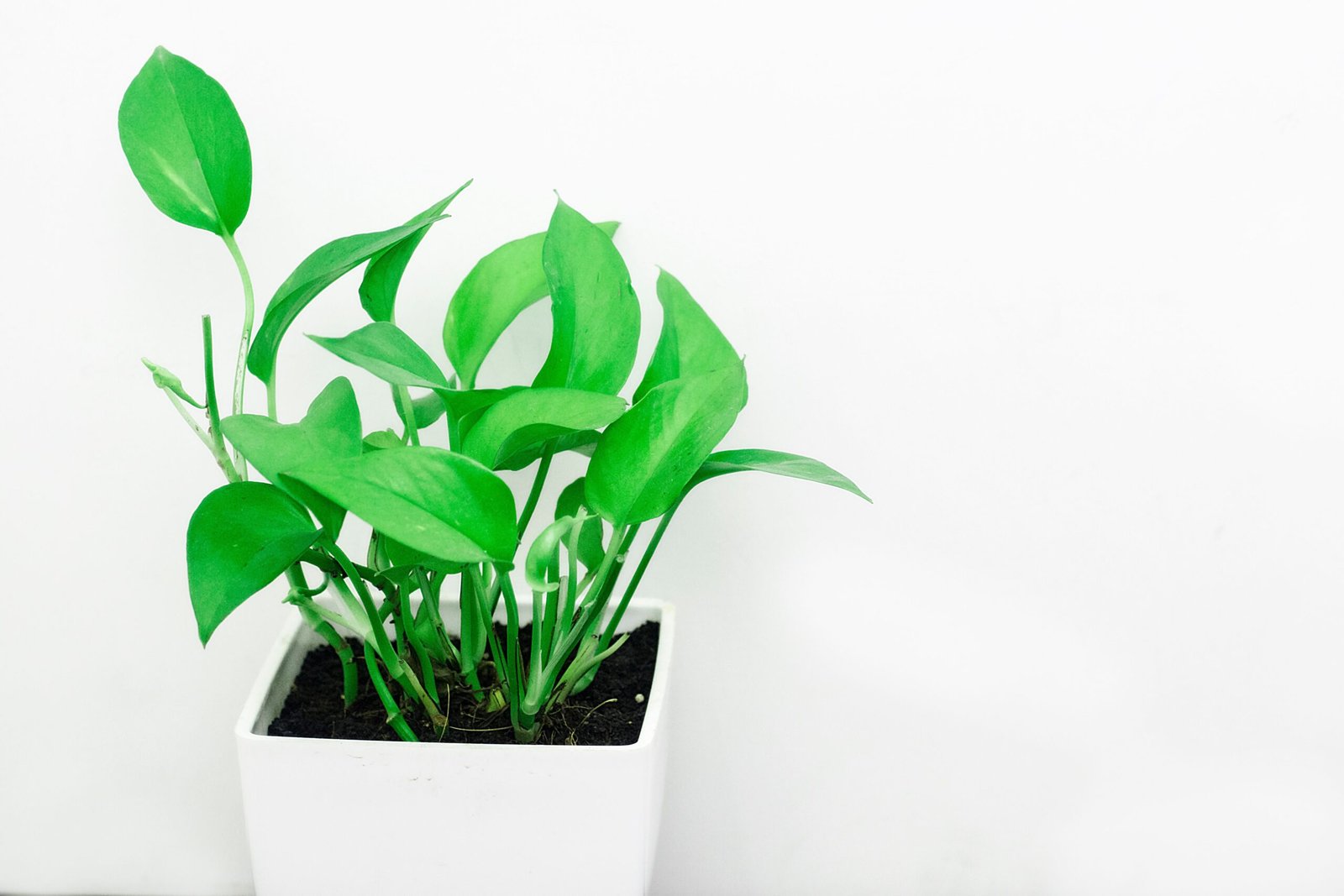
| Pothos, philodendron | Every 2–3 weeks, when top 2 inches dry |
| Snake plant, ZZ plant | Every 3–4 weeks; let soil dry fully |
| Succulents & cacti | Every 4–6 weeks; barely moist is fine |
| Peace lily, ferns | Every 1–2 weeks; keep lightly moist |
| Monstera, rubber plant | Every 2–3 weeks, when top 2 inches dry |
| Spider plant | Every 2–3 weeks; tolerates short dry spells |
Treat this as a starting point, not a law. Your home is the final judge — always confirm with the finger test.
Overwatering vs. Underwatering: How to Tell
Signs of overwatering (the more common winter problem):
- Yellow, soft, or mushy lower leaves
- Soil that stays wet for a week or more
- A sour or musty smell from the pot
- Wilting despite wet soil — the roots are rotting and cannot drink
Signs of underwatering:
- Brown, crispy leaf edges and tips
- Dry soil pulling away from the pot’s edges
- Drooping leaves that perk up within hours of watering
- Slow leaf drop starting from the bottom
If you suspect overwatering, stop watering immediately, move the plant to brighter light, and let the soil dry out fully. In severe cases (mushy stems, black roots), repot into fresh, dry mix.
5 Winter Watering Tips That Actually Help
- Use room-temperature water. Cold water straight from the tap can shock roots in an already cool pot. Fill your watering can and let it sit for an hour first.
- Water in the morning. Leaves and soil surface dry faster during the day, which discourages fungus and gnats.
- Empty the saucer. Standing water is the fastest route to root rot, especially in winter.
- Skip the fertilizer. Most houseplants rest in winter and cannot use the nutrients. Resume feeding in early spring when new growth appears. (One light feeding mid-winter is plenty for plants still actively growing.)
- Boost humidity, not water. Group plants together, set pots on a pebble tray with water, or run a small humidifier nearby. Dry air bothers leaves; extra water bothers roots.
A Note on Temperature
Keep most tropical houseplants between 60°F and 75°F in winter. Avoid placing them against icy windowpanes at night or directly above heating vents — both extremes stress the plant and confuse your watering read. Most common houseplants suffer below 50°F, so move cold-sensitive plants a few inches back from drafty windows.
FAQ
Should I mist my plants in winter?
Misting raises humidity for a few minutes, then it is gone. It helps a little and harms nothing — but a pebble tray or humidifier does far more for dry winter air.
Can I use a moisture meter?
Yes — a simple probe meter takes the guesswork out of the finger test, especially for large pots where the surface lies about deeper moisture. Water when it reads “dry” at root depth.
My plant is dropping leaves in winter. Is it dying?
Probably not. Many houseplants shed a few older leaves as light drops. Worry only if the dropping is heavy, the stems feel mushy, or new growth looks distorted.
Do I water less even if my home is warm?
Yes, but adjust: a warm, bright home keeps plants somewhat active. Start with the table above and shorten the interval by a few days if the soil dries faster.

2 Comments
Why Are My Snake Plant Leaves Curling? 6 Causes & Fixes
November 2, 2026[…] […]
Why Are My Pothos Leaves Turning Yellow? Causes and Fixes
November 2, 2026[…] […]