

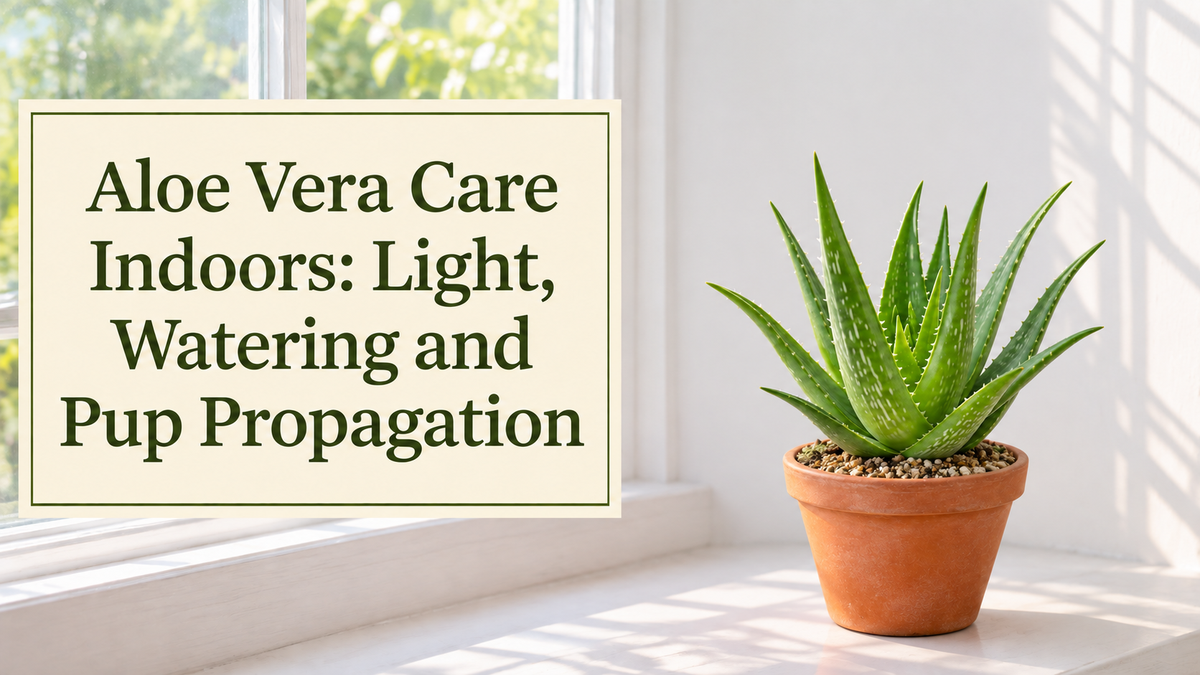
Aloe vera care starts with plenty of bright light, gritty soil and enough time for the pot to dry between waterings. Aloe is a desert succulent in the Asphodelaceae family. Its thick leaves store water, so a routine that keeps a leafy tropical plant happy can leave an aloe sitting in wet soil.
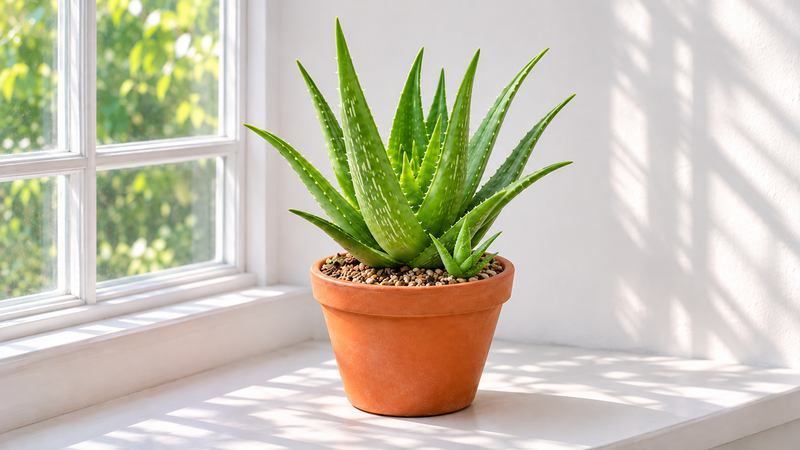
Choose a bright position and introduce direct sun gradually. Use a fast-draining mix in a pot with drainage holes, ideally terracotta. When the mix has dried all the way through, water deeply and empty the saucer.
If you are unsure how often to water aloe vera, check the soil before acting. Floppy, splayed growth often points to weak light. More water can make matters worse if the roots are already damp.
Plants may reach 1–3 feet (30–90 cm), and flowers are rare indoors. Give the plant room and a bright spot before settling on a watering routine.
Aloe Vera Stores Water in Its Leaves
The accepted name is Aloe vera (L.) Burm.f. You may see the older name Aloe barbadensis Miller on plant labels. Aloe vera comes from the Arabian Peninsula, including the foothills of the Hajar Mountains in northern Oman. USDA zones 10–12 apply to outdoor growing conditions.
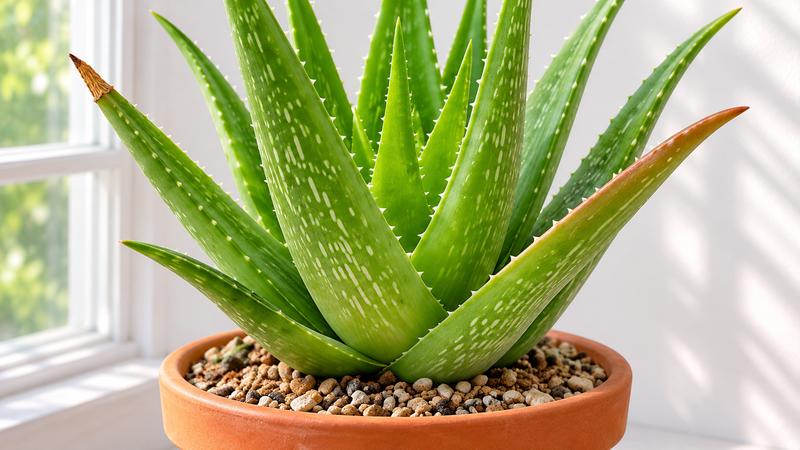
The leaves form a rosette, a circle of fleshy leaves that emerge from the centre. Mature leaves have small teeth along their edges. Cut through a leaf and you can see three distinct parts.
The green rind is the tough outer covering. Its waxy surface helps protect the water stored inside. Just beneath the rind is yellow latex, a bitter sap that contains compounds including aloin. The clear inner gel is the soft core and contains around 98–99 percent water. Anthraquinones in this latex absorb UV light and help protect the gel core.
These layers matter for aloe vera care because the leaf holds a water reserve. A healthy, firm leaf can carry the plant through dry soil. When you cut a leaf to prepare gel, keep the yellow latex separate from the clear centre.
Bright Light and Gradual Sun Exposure Support Firm Growth
Aloe vera light requirements are easiest to meet near a bright window. Aim for 6–8 hours of bright light daily. In the Northern Hemisphere, a south- or west-facing window can provide plenty of light. An east-facing window can work where it receives bright morning sun.
Check what reaches the leaves. Trees and buildings can shade a window regardless of its direction. Thin, pale, stretched leaves or a rosette that flops open are signs to try a brighter spot.
An established aloe can take 3–4 hours of direct morning sun. Introduce direct sun over about 1–3 weeks, especially after bringing the plant home or moving it outdoors. Start in bright indirect light for about two weeks, then try 1–2 hours of gentle morning sun. Increase exposure as the leaves adjust.
Bleached or papery patches on the sun-facing side can mean the move was too sudden. Move a sunburned plant to shade immediately. Check the mix before watering, since sunburn does not show the roots need water. Water lightly if it is fully dry.
Where temperatures regularly exceed 90°F (32°C), partial shade from noon to 4 p.m. helps. Use 30–40 percent shade cloth in intense sun.
A full-spectrum LED for 12–14 hours daily can support aloe vera care when windows are too dim. Recheck the plant after changing its position or light. Firm, compact new growth is a better sign of a suitable spot than the colour of a single older leaf.
Aloe Needs a Full Dry-Out Between Thorough Waterings
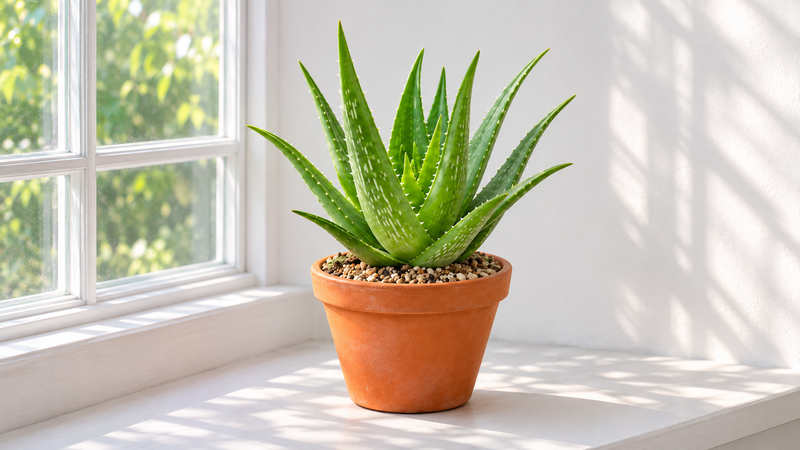
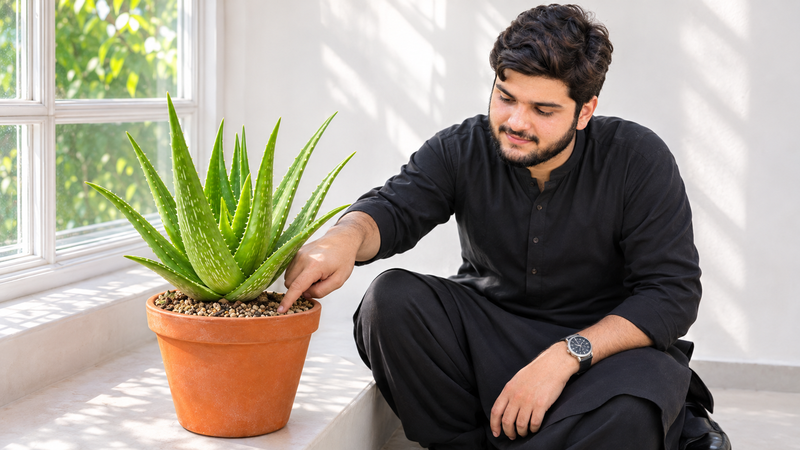
Deciding how often to water aloe vera starts with the mix. Let it dry completely. Push a finger about 2 inches (5 cm) into the soil and consider the moisture lower in the pot. The top inch can feel dry while the centre stays wet.
Lift the pot to compare its wet and dry weight. For a 15 cm terracotta pot, the difference can be about 400–600 g. Wrinkled or dimpled leaves can support the decision to water once the mix is fully dry.
Pour until water runs steadily from the drainage holes. A 15 cm pot typically takes 250–500 mL, with runoff guiding the amount. Let it drain and empty the saucer or outer container.
Use this timetable as a rough guide. Check the mix before watering.
| Conditions | Example interval | What to check |
|---|---|---|
| Spring and summer growth | Every 2–3 weeks | The mix is dry throughout. |
| Autumn and winter slowdown | Every 4–6 weeks | The lower mix has dried. |
| Cool, dim winter position | Every 6–8 weeks | The pot is light and fully dry. |
| Small pot in hot, bright conditions | As soon as 10–14 days | Confirm it has dried before watering. |
Never water on a fixed weekly schedule. These intervals are examples, and a deep pot may hold moisture for much longer than a small terracotta one. Test a few inches down and account for light, weather, pot material and pot size before you water.
The full dry-out is central to aloe vera care because wet roots can rot. If a leaf has changed colour, check the plant and the pot together before deciding whether it needs water.
Gritty Soil and a Draining Pot Protect Aloe Roots
Use gritty cactus or succulent mix. If it feels peaty, add one part perlite to two parts mix. Penn State’s recipe uses one part potting soil, one part coarse sand and one part perlite or lava rock. Use plain potting soil without substituting compost or enriched mix. Perlite’s irregular shape prevents compaction, while pumice helps steady top-heavy plants.
Test a small pot of mix. Water should come out almost immediately, and the mix should dry within three days. Use these checks to spot slow drainage or drying.
Terracotta suits aloe vera care because it dries faster. Choose a pot with drainage holes, about 1–2 inches (2.5–5 cm) wider than the root ball. Gravel cannot replace drainage holes. Remove nursery pots from decorative containers to water and drain them.
Aloe prefers to be slightly root-bound. Check about every two years. Repot if the mix stays wet for five days or more or becomes compacted. Look for roots circling or poking through holes, crowding pups or a top-heavy plant. Keep the same planting depth, give bright indirect light and wait 3–5 days before watering. Check the mix is dry first.
For care advice on other houseplants, browse our Indoor Plant Guides collection.
Warm Rooms and Average Household Humidity Suit Aloe
Aim for 55–80°F (13–27°C) overall. Daytime temperatures of 65–80°F (18–27°C) suit aloe, with a cooler 55–60°F (13–16°C) at night. Bring plants indoors when outdoor temperatures drop below 50°F (10°C).
Cold injury can leave leaves limp, soft or collapsed. Frost can turn them mushy. In winter, check the spot beside the window after dark. The room may feel warm while the glass and nearby air are much colder.
Keep winter temperatures above 50°F (10°C), and keep the plant clear of cold drafts, radiators and heating vents. Give it a bright indoor position and expect longer gaps between waterings as growth slows. Water again only after a full dry-out.
Low to average household humidity is enough for aloe vera care. Skip misting. In a humid room the mix can dry more slowly, so allow extra time between waterings.
If you move the plant for winter, watch how the new position affects light and drying. Keep the leaves dry, the mix open to air and the plant where it will not sit in a cold draft.
Aloe Vera Care Needs Only Light Feeding During Active Growth
Aloe vera care calls for one or two light feeds during active spring and summer growth. The RHS monthly liquid feed from May to August is the cited UK maximum. Follow local seasons and stop feeding from October through March on a Northern Hemisphere schedule.
Choose a lower-nitrogen ratio such as 2-7-7 or 10-40-10. Too much nitrogen can produce fast, weak growth. A balanced 10-10-10 at half strength is another option. Moisten dry mix with plain water, then apply diluted feed to moist soil and let it drain.
Organic options include diluted worm castings or worm-casting tea, liquid seaweed and fish emulsion at half strength.
Clemson Extension ties feeding benefit to adequate bright light. Pause feeding while a plant is resting, stressed, newly repotted or recovering. Wait three months after purchase and six months for young pups. Too much fertilizer can leave salts in the mix and crisp the tips.
The Texture and Location of Browning Point to Its Cause
The answer to “why is my aloe vera turning brown” depends on texture and location. Gently press the affected area. Check soil moisture too. Tip damage is usually mildest. Browning that starts at the base is dangerous, and a soft centre crown is most serious.
| Texture and location | Likely cause | First action |
|---|---|---|
| Soft, translucent brown base and wobbling | Overwatering or rot | Stop watering and inspect roots promptly. |
| Dry, crispy tips or edges | Dryness, sun or salts | Check soil, light and feeding. |
| Firm leaves with an even copper tint | Sun stress | Reduce strong exposure. |
| Pale, papery patches facing the window | Sunscald | Move into bright indirect light. |
| Soft dark brown or black tissue | Dead tissue | Inspect the base and roots. |
| Limp, collapsed leaves after cold | Cold injury | Move somewhere warmer. |
| Oldest lower leaves slowly fading | Normal ageing | Check central growth. |
Cold damage can appear days after exposure. For rot, unpot the plant, cut damaged tissue back to firm growth and trim black or mushy roots. Air-dry for 1–2 days, then repot in fresh dry cactus mix. Wait 1–2 weeks before a light watering.
Hard water and excess fertilizer can leave salts that crisp tips. Flush a freely draining pot with plain water when watering is due.
Firm copper colouring may fade. Brown tips cannot heal, but they can stop spreading once you correct the cause. Trim dry tips for appearance and judge aloe vera care by new central growth. Also check for scale bumps or round fungal spots.
For more help with watering, soil and leaf problems, visit our Plant Care collection.
Rooted Pups Are the Reliable Way to Propagate Aloe
Pups are offsets that grow beside the parent. If you are working out how to propagate aloe vera pups, choose an offset at least 3-4 inches (10 cm) tall with 4–6 leaves, a growing point and roots of its own. Spring or early summer is a good time.
- Water the mother plant 24 hours before separating the pup.
- Ease the whole plant out of its pot and find the narrow join between the pup and parent.
- Cut the join with a clean, sharp knife or secateurs. Keep as many of the pup’s own roots as possible.
- Let the cut dry and form a callus for 2–3 days in a dry, shaded spot.
- Set the pup in dry cactus mix in a small terracotta pot about 4–6 inches (10–15 cm) across. Keep the leaf bases above the mix.
- Wait about seven days before watering lightly. Give bright indirect light for the first two weeks.
First pups typically appear at 3–5 years. A slightly pot-bound plant in bright light is most likely to produce them. Keep aloe vera care steady while the pup establishes. Rooting hormone is generally unnecessary.
Leaf cuttings almost never succeed with aloe because the leaves are mostly water, so stick with pups.
Seeds germinate in 2–4 weeks at 21–27°C (70–80°F). Seedlings take 6–12 months before potting up individually.
Aloe Vera Is Toxic to Dogs, Cats and Horses
The ASPCA lists aloe vera as toxic to dogs, cats and horses. It contains saponins and anthraquinones. Signs often appear within a few hours and include vomiting in cats and dogs, lethargy, diarrhea, drooling, poor appetite and reddish urine.
The latex causes diarrhea because its anthraquinone glycosides share a chemical family with stimulant laxatives. There is no established safe dose. A whole leaf is especially concerning because it includes the latex.
Aloe poisoning is rarely fatal in healthy adult cats. Call a vet promptly after any suspected ingestion. In the United States, call ASPCA Poison Control at (888) 426-4435 or Pet Poison Helpline at (855) 764-7661.
For aloe vera care around pets, use an inaccessible shelf only if it gets at least six hours of bright light. Clear away cut leaves. Cat-safe swaps include Haworthia, Echeveria and Hens and Chicks.
The Clear Gel Needs Careful Preparation
Aloe vera care and gel preparation meet when you cut a leaf. Choose a thick, mature outer leaf and cut close to the base with a clean knife. Yellow latex can run from the cut and irritate skin.
Stand the leaf cut-side down in a clean cup for 10–15 minutes. Discard the yellow liquid and rinse the cut end. Trim the spiky edges and slice away the green skin on both sides. Scoop out the clear inner gel with a clean spoon.
A strong bitter smell or any yellow tint suggests aloin remains. Rinse away yellow streaks and let the latex drain fully.
Gel and latex are different substances with different effects. The gel is generally safe topically. The latex is a drug — treat it with the respect (and caution) that a drug deserves.
In 2002, the US FDA barred aloe latex as an active ingredient in over-the-counter laxatives sold without approval. The RHS describes aloe gel as soothing mild sunburn. See a doctor for deep cuts, infected skin, severe burns or sunburn with blisters, fever, chills or dizziness.
Refrigerate gel in a clean, covered jar and use it within about a week. You can freeze it in cubes.
Frequently Asked Questions
How often should I water aloe vera?
Water deeply once the soil is completely dry throughout. That may mean every 2–3 weeks during spring and summer and every 4–6 weeks in winter. Cool, dim conditions can stretch the interval. Adjust aloe vera care to the pot’s drying speed and wait a little longer if unsure.
How much light does aloe vera need?
Aim for 6–8 hours of bright light daily. Aloe vera light requirements can be met near a sunny south- or west-facing window in the Northern Hemisphere. East windows can work too. Give young aloes filtered light. Introduce gentle morning sun gradually and watch for firm, compact new growth.
Why is my aloe vera turning brown?
Check where the browning starts and how it feels. A soft brown base may mean rot and needs prompt attention. Check the roots for damage. Dry, crispy tips can come from dryness, sun, or salts. Firm copper colouring may fade gradually as exposure eases. Dead brown patches stay brown.
How do I propagate aloe vera pups?
If you are deciding how to propagate aloe vera pups, choose one at least 3-4 inches (10 cm) tall with 4–6 leaves and its own roots. Cut it free, let the cut dry for 2–3 days, pot in dry cactus mix and water lightly after about seven days.
Is aloe vera toxic to cats and dogs?
Yes. Aloe contains saponins and anthraquinones that can cause vomiting, lethargy and diarrhea. Keep the plant and cut leaves out of reach. If a pet eats aloe, call your veterinarian or, in the United States, ASPCA Poison Control at (888) 426-4435. Prompt advice matters even before symptoms.