


Yellow leaves on a pothos are a message, not a death sentence. Pothos are famously forgiving plants, and most yellowing has one clear cause — usually water, light, or simple old age. The trick is reading which kind of yellow you are seeing before you change anything, because watering a plant that is already drowning only makes it worse.
Here is the short answer, then the full diagnosis.
The Short Answer
In most cases, pothos leaves turn yellow because the soil stays wet too long. Check the soil first: push your finger about 2 inches into the pot. If it feels damp a week after watering, overwatering is the most likely cause — let the soil dry out, make sure the pot drains, and trim the yellow leaves. If the soil is bone dry and the leaves feel crispy, underwatering is the culprit instead. Yellow leaves will not turn green again, so the goal is to stop new ones from yellowing.
Quick Diagnosis: Match What You See
| What you see | Most likely cause | First fix |
|---|---|---|
| Older, lower leaves yellowing, soil still wet | Overwatering | Stop watering; let the top 2 inches dry; check drainage |
| Yellow, soft or mushy leaves, mushy stems, sour-smelling soil | Root rot | Trim rotted roots, repot in fresh dry mix (see below) |
| Leaves yellowing all over, soil bone dry, crispy edges | Underwatering | Water thoroughly until it drains; then water only when the top 2 inches are dry |
| One or two old leaves yellowing, rest of the plant healthy | Natural aging | Trim them off; no other change needed |
| Pale yellow leaves, plant in a dark corner | Too little light | Move to bright, indirect light |
| Yellow or bleached patches on leaves facing a window | Too much direct sun | Move back from the window or add a sheer curtain |
| Yellow leaves with tiny webs, spots, or sticky residue | Pests | Inspect leaf undersides; wash leaves; isolate the plant |
| Yellowing after a cold draft or a move | Temperature stress | Keep between 60°F and 85°F; keep away from cold windows and heating vents |
1. Overwatering — the Most Common Cause
Pothos like to dry out between waterings. When the soil stays soggy, roots cannot get oxygen, and the oldest leaves usually yellow first, then drop. The soil may still feel wet days after you watered, and the pot may feel heavy.
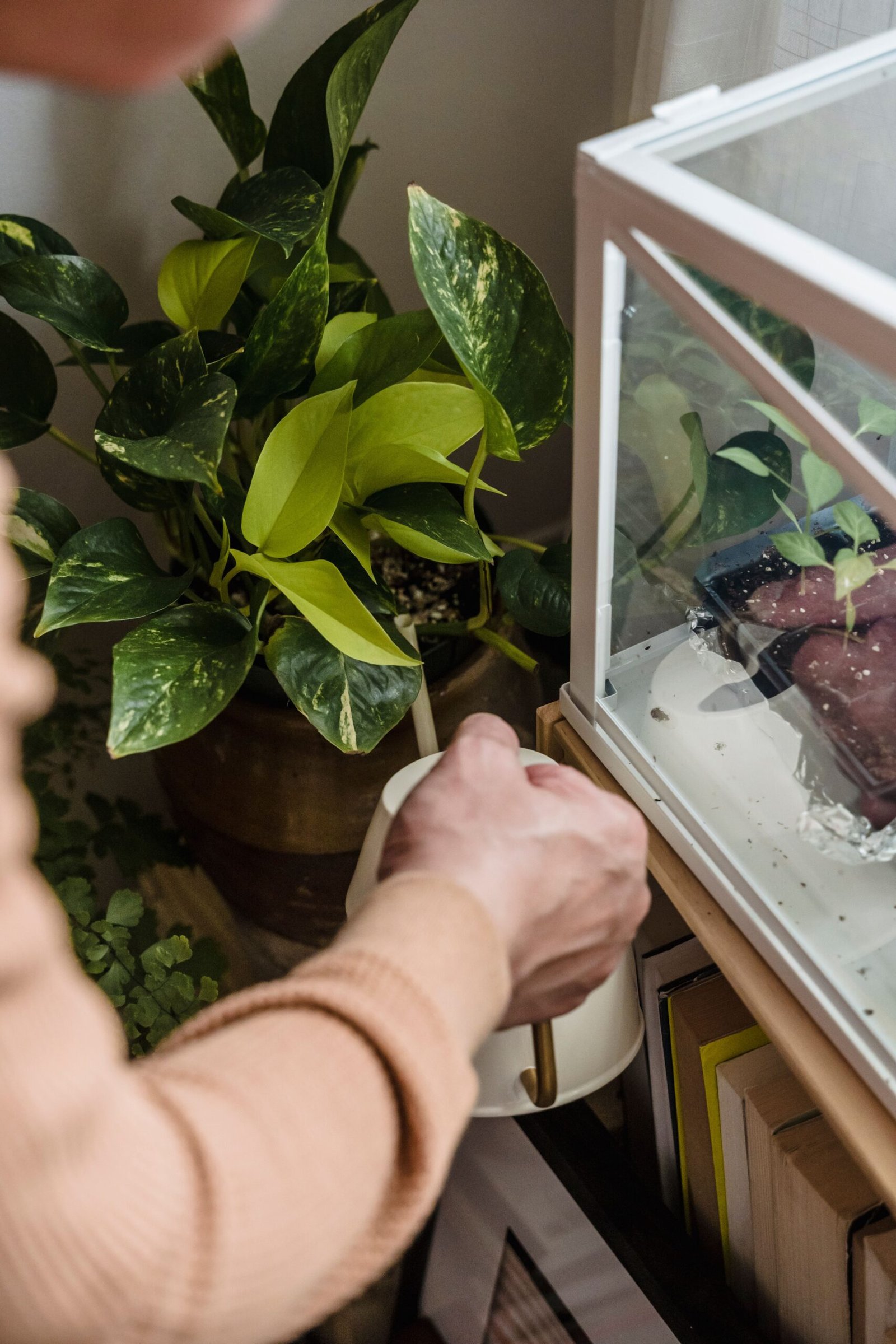
Fix: Do not water again until the top 2 inches of soil feel dry. Empty the saucer after watering so the plant never sits in standing water. If the pot has no drainage hole, water much more carefully — or move the plant to a pot with drainage. In winter, this matters even more: growth slows and plants need water far less often.
2. Root Rot — When Overwatering Has Gone Too Far
If yellow leaves feel soft or mushy, stems feel soft at the base, or the soil smells sour, root rot may have set in. This is the one cause to act on quickly.
Fix: Gently remove the plant from its pot and inspect the roots. Healthy roots are firm and light-colored; rotted roots are brown or black and mushy. Trim the rotted parts with clean scissors, shake off the old wet soil, and repot in fresh, well-draining potting mix. Water lightly after repotting, then wait until the top 2 inches dry before watering again. Cuttings from any healthy vine can be rooted in water as a backup while the main plant recovers.
3. Underwatering
A thirsty pothos usually tells you differently: leaves yellow from the edges, feel dry and crispy, and the soil pulls away from the sides of the pot. The plant may also droop, but it usually perks up within hours of a good drink.
Fix: Water thoroughly until water runs from the drainage holes, then empty the saucer. Going forward, use the finger test rather than a calendar: water when the top 1 to 2 inches are dry, which for most indoor pothos is about every 1 to 2 weeks in the growing season and every 2 to 4 weeks in winter.
4. Natural Aging — the Harmless One
Losing one or two older leaves now and then is normal. If the yellowing is limited to the oldest, lowest leaves, the rest of the plant looks healthy, and new growth keeps coming, nothing is wrong. Trim the yellow leaves off with clean scissors — this also keeps the plant looking tidy and lets you spot real problems sooner.
5. Too Little Light
Pothos survive in low light, but they do not thrive in it. In a dark corner, growth slows, leaves may turn pale yellow, and variegated types often lose their variegation and go mostly green.
Fix: Move the plant to bright, indirect light — near a window with a sheer curtain, or a few feet back from a sunny window. Avoid moving it straight into harsh direct sun, which causes the next problem.
6. Too Much Direct Sun
Direct afternoon sun can scorch pothos leaves, leaving yellow or bleached patches, usually on the side facing the window. Variegated leaves are the most sensitive.
Fix: Pull the plant back from the glass or filter the light with a sheer curtain. East-facing morning light is usually gentle enough; hot south- or west-facing sun through glass is the risk.
7. Pests and Temperature Stress
Check the undersides of yellow leaves for fine webbing, tiny insects, or sticky residue — spider mites and other common houseplant pests can cause yellowing. Wash the leaves with a damp cloth, isolate the plant from neighbors for a week or two, and repeat the check. For temperature, keep pothos between about 60°F and 85°F, away from cold drafts at night and from radiators or heating vents, both of which stress leaves and confuse your watering read.
What to Do Today: A 5-Minute Checklist
- Finger test: Is the top 2 inches of soil wet, damp, or dry?
- Drainage check: Does the pot drain, and is the saucer empty?
- Light check: Is the plant in bright, indirect light — not a dark corner, not harsh direct sun?
- Leaf check: Are only old lower leaves yellow, or is it spreading? Any webs, spots, or mushy stems?
- Trim and wait: Remove yellow leaves (they will not recover), make the one fix that matches your diagnosis, and give the plant a week or two before changing anything else. Changing water, light, and soil all at once makes it impossible to know what worked.
When to Worry — and When Not To
Worry, and act promptly, if yellowing spreads fast, stems feel mushy, or the soil smells sour — that points to root rot. Do not worry about a single old leaf yellowing on an otherwise healthy, growing plant. Most pothos bounce back once the one wrong condition is fixed, and a few yellow leaves early on do not mean the plant is doomed.
FAQ
Should I cut off yellow pothos leaves?
Yes. A yellow leaf will not turn green again. Trimming it off is safe, keeps the plant tidy, and helps you see whether new yellowing stops after your fix.
Can I save a pothos with root rot?
Often, yes, if some roots are still firm and healthy. Trim the rotted roots, repot in fresh dry mix, and take a few healthy cuttings as insurance. If every root is mushy and the stems are soft throughout, cuttings are the realistic way to start again.
Why is my pothos yellowing in winter?
Winter is the peak season for overwatering: shorter days and cooler rooms slow growth, so soil stays wet longer on a summer watering schedule. Water only when the top 2 inches are dry, and expect longer gaps between waterings.
Is a yellowing pothos dangerous to pets?
Pothos leaves are toxic if chewed or eaten by cats and dogs, so keep the plant out of reach of pets that nibble plants, and trim fallen leaves off the floor. This post is plant-care advice, not veterinary advice — if a pet eats a large amount, contact a veterinarian.

1 Comment
Why Do Indoor Plants Get Brown Tips? Causes and Fixes
November 4, 2026[…] […]