
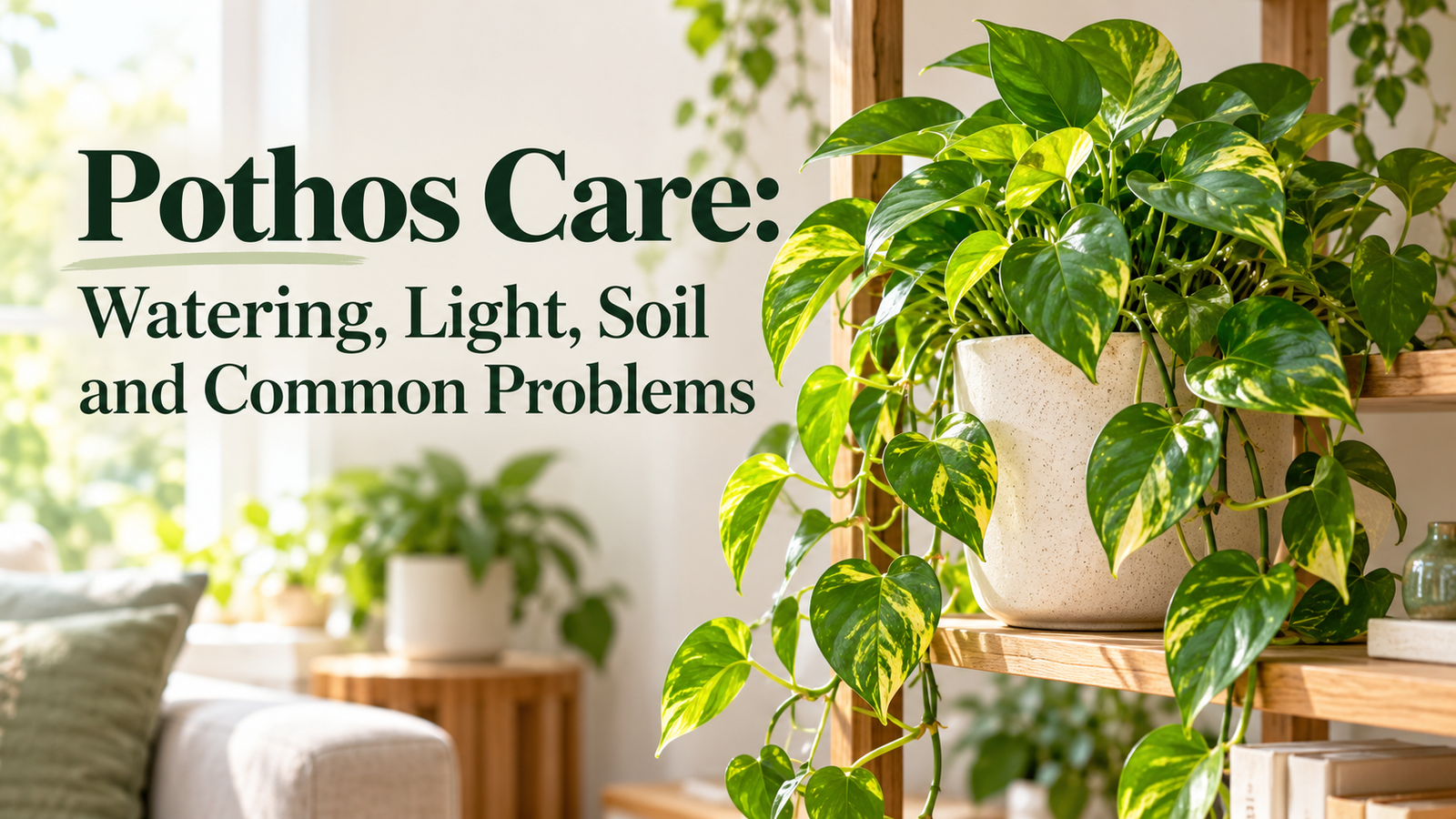

Pothos care indoors is mostly about getting three things right: provide bright, indirect light, check the potting mix before watering, and use a container that drains properly. Pothos can tolerate some shade and occasional missed waterings, but constantly wet soil and harsh sunlight can cause problems. You do not need an elaborate routine to keep this climbing or trailing plant healthy. Start with its growing conditions, watch how the leaves respond, and make changes based on what you actually see rather than following a rigid calendar.
Pothos Care Indoors at a Glance
| Care factor | What pothos generally needs |
|---|---|
| Botanical name | Epipremnum aureum |
| Common names | Golden pothos, devil’s ivy |
| Light | Bright, indirect light; tolerates some shade |
| Watering | Water when the potting mix is approaching dryness |
| Soil | Airy, well-draining houseplant potting mix |
| Temperature | Preferably 65–86°F (18–30°C), away from cold drafts |
| Humidity | Average indoor humidity is usually workable |
| Growth habit | Trailing vine or climbing plant |
| Pet safety | Toxic to cats and dogs if chewed or eaten |
These are starting points. Plants in brighter, warmer rooms may need water sooner than those in dimmer, cooler spaces.
What Is a Pothos Plant?
Pothos, botanically known as Epipremnum aureum, is a tropical evergreen vine in the arum family (Araceae). Young houseplants usually have glossy, somewhat heart-shaped leaves on long stems. Golden pothos often shows yellow or cream markings, while cultivars such as ‘Neon’, ‘Jade’, and ‘Marble Queen’ have different leaf colors and patterns.
Pothos can trail from a hanging basket or climb using aerial roots along its stems. Mature climbing plants may develop much larger leaves than ordinary indoor trailing vines.
How to Recognize Golden Pothos
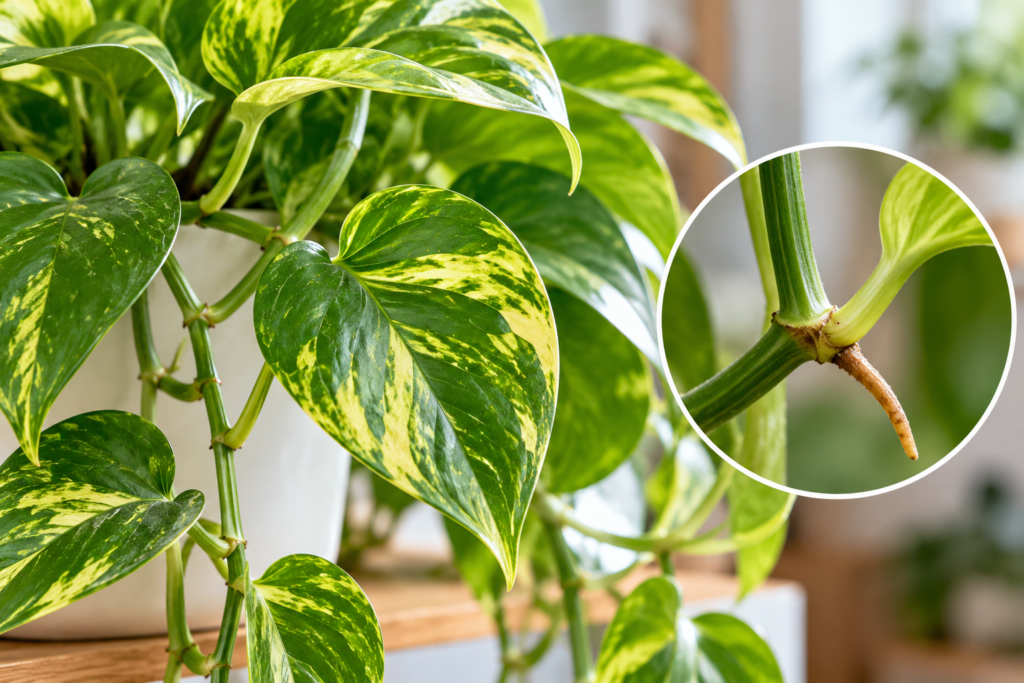
Look for glossy leaves, irregular green-and-yellow variegation, and grooved leaf stalks (petioles). A node is a point along the stem where a leaf emerges and roots or new shoots can develop.
Pothos vs. Similar-Looking Houseplants
Heartleaf philodendron (Philodendron hederaceum) has smoother leaf stalks and protective sheaths around new leaves. Satin pothos (Scindapsus pictus) belongs to another genus and usually has matte, silver-patterned foliage. Checking the botanical name matters for pothos care indoors because similar-looking plants may need different treatment.
How Much Light Does Pothos Need Indoors?
Bright, indirect light is the best general starting point for pothos care indoors. Think of a room with ample daylight where the plant is not exposed to hours of intense, unfiltered sun. A filtered window position often works, depending on season and nearby shade.
Bright Indirect Light vs. Low Light
Pothos tolerates shade, but in dim conditions growth slows, new leaves may be smaller, and variegation can fade. A dark room is not a suitable long-term location without a grow light.
Signs of Too Much or Too Little Light
Scorched patches on sun-exposed leaves may indicate excess light. Slow growth, long gaps between leaves, or fading variegation may suggest insufficient light. Check other conditions before deciding.
Where to Place Your Pothos at Home
Try a bright shelf or filtered window, using a sheer curtain if sunlight is intense. Rotate the pot occasionally for balanced growth; avoid changing its location every day.
How to Water a Pothos Plant Properly
For pothos care indoors, the most reliable watering habit is to assess the soil instead of counting days. A small pot in warm, bright conditions may dry quickly, while a large container in low light may stay damp for much longer. Watering on the same weekday regardless of conditions can leave roots too wet or too dry.
Check the Soil Before Watering
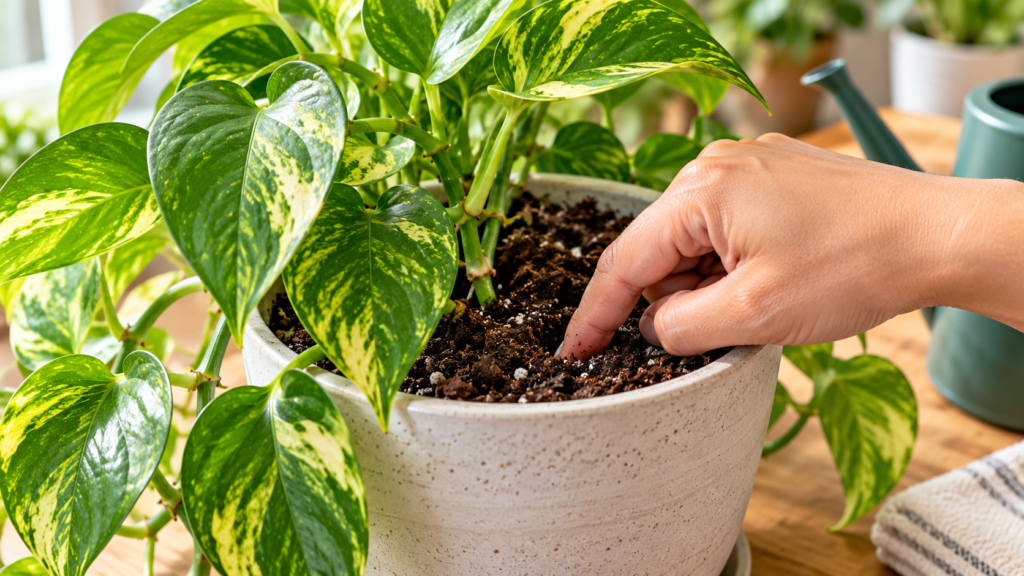
Touch the potting mix below the surface, roughly an inch (2–3 cm) down in an average small pot. If that upper layer is still noticeably damp, check again later. If it is approaching dryness, consider the weight of the pot and whether the lower root zone may still be wet. A single dry surface reading does not prove that the entire pot needs water, especially in deep containers.
Water Thoroughly and Let the Pot Drain
The Royal Horticultural Society’s epipremnum growing guide also recommends watering as the mix approaches dryness. When watering is needed, pour slowly until some drains through the bottom. Let the excess escape, then empty the saucer or outer decorative pot. Do not allow the nursery pot to stand in collected water for long periods. If the mix has become extremely dry and water runs straight down the sides, moisten it gradually and confirm that the root area is taking up water.
Why Watering Needs Change
Light, temperature, pot material, roots, and potting mix all affect drying time. During darker or cooler periods, growth and water use may slow. Seasonal advice must match your location: Australian seasons differ from those in the Northern Hemisphere.
Best Soil and Pot for Growing Pothos Indoors
For pothos care indoors, a suitable potting mix should hold some moisture while allowing water and air to reach the roots. A standard houseplant mix can work if it stays loose and drains well.
Choosing a Well-Draining Potting Mix
Use a container potting mix rather than heavy garden soil. Commercial mixes may contain bark, coir, or perlite for structure. No single recipe is essential: good pothos care indoors depends on a balance of drainage and moisture retention.
Why Drainage Holes and Pot Size Matter
Use a pot with drainage holes. If it sits in a decorative outer pot, empty collected water. An oversized pot can leave a small root ball surrounded by persistently wet mix.
When Does Pothos Need Repotting?
Check for crowded roots or potting mix that no longer drains well. One root at a drainage hole is not necessarily urgent. Inspect the root ball and move to a modestly larger pot only when needed.
Temperature, Humidity and Fertilizer for Pothos
Keep Pothos Away From Temperature Extremes
Pothos prefers warmth, with about 65–86°F (18–30°C) a useful range. Keep it away from chilly drafts, cold window glass, and heating or cooling vents.
Does Pothos Need High Humidity?
Pothos generally tolerates normal household humidity. Very dry air can contribute to leaf-tip stress, but brown tips have several possible causes. Misting is not essential for pothos care indoors; consider a humidifier if the room is persistently dry.
When to Fertilize an Indoor Pothos
Apply houseplant fertilizer according to its label during active growth, reducing or pausing feeding when growth slows. Extra fertilizer cannot repair waterlogged roots or insufficient light and may damage leaf tips.
Pruning and Supporting Healthy Pothos Growth
How to Prune Long or Sparse Vines
Trim overly long vines just above a leaf node with clean tools. This encourages branching over time. Remove badly damaged leaves when appropriate, but remember that pruning does not correct poor growing conditions.
Growing Pothos as a Climbing or Trailing Plant
Let vines trail from a basket or train them gently up a moss or coir pole. Secure stems loosely; climbing plants may develop larger foliage.
Cleaning Leaves and Checking for Pests
Routine pothos care indoors includes wiping dusty leaves with a damp cloth and inspecting stems for fine webbing, bumps, or white cottony patches. Mealybugs and scale insects sometimes infest pothos, so check regularly.
Common Pothos Problems and What They May Mean
Even with good pothos care indoors, older leaves may yellow occasionally. Notice whether symptoms are isolated or spreading. This table suggests observations, not definitive diagnoses.
[IMAGE 4 HERE]
| What you notice | What to investigate first |
|---|---|
| One older yellow leaf | Natural leaf aging; check whether newer leaves remain healthy |
| Several yellow leaves | Potting mix moisture, drainage, light, and root condition |
| Brown leaf tips or edges | Watering inconsistency, concentrated fertilizer, light or environmental stress |
| Limp or drooping vines | Soil dryness, persistent wetness, and root health |
| Long vines with small leaves | Light availability, growth habit, and overall plant vigor |
| Sticky leaves or cottony patches | Inspect for mealybugs, scale, or other pests |
When a Pothos Problem Needs Closer Inspection
Check soil moisture below the surface, drainage, recent changes, and whether young leaves are affected. If the mix remains wet while the plant declines, inspect roots for damage or decay. Leaf color alone cannot confirm root rot.
Isolate plants with suspected pests and avoid unverified remedies. Seek advice from a horticultural extension service or plant-health professional if decline continues without a clear explanation.
Is Pothos Toxic to Cats, Dogs and Children?
Yes. Pothos contains insoluble calcium oxalate crystals and should be kept out of reach of pets and children. If a cat or dog chews the plant, it may develop mouth irritation, drooling, vomiting, or difficulty swallowing. The ASPCA’s golden pothos toxicity guidance identifies it as toxic to both cats and dogs and advises contacting a veterinarian or animal poison-control service after suspected ingestion.
For children, seek advice from a local poison-control service or medical professional if plant material has been chewed or swallowed. Wear gloves if the sap irritates your skin, and wash your hands after pruning. Safe placement matters for pothos care indoors: a high shelf may not protect curious cats if trailing vines remain within reach.
FAQs
Can pothos survive in a room with little natural light?
Pothos tolerates some shade, but extremely low light can lead to poor growth and reduced leaf variegation. If a room stays very dark, a suitable grow light may be needed. A healthy plant should show sustained growth over time, not simply remain alive.
Should I mist my pothos leaves?
Misting is generally unnecessary for pothos care indoors. Most plants can cope with ordinary indoor humidity. If the air is unusually dry, a room humidifier may offer more consistent conditions than occasional misting. Keep leaves clean and provide reasonable airflow.
Can pothos grow in water instead of soil?
Yes, pothos stem cuttings can root in water, provided the cutting includes a node. Growing a plant in water long term requires attention to water quality and appropriate nutrients; plain water does not supply everything the plant needs indefinitely. Roots that form in water may also need extra care when moved into potting mix.
How do I make my pothos plant look fuller?
Provide adequate indirect light, prune excessively long vines above nodes, and maintain suitable watering and nutrition. Pruning can encourage new side shoots, while several established rooted cuttings in one pot may create a fuller appearance. Avoid cramming too many plants into a container with inadequate root space.
Keeping Your Pothos Healthy Indoors
Successful pothos care indoors comes from observing the plant rather than following strict schedules. Give it bright, filtered daylight, water when the potting mix is approaching dryness, and use a well-draining container. If leaves change color or vines begin to droop, compare several clues before making adjustments. These simple checks make it easier to maintain healthy growth and recognize when a more specific problem needs attention.